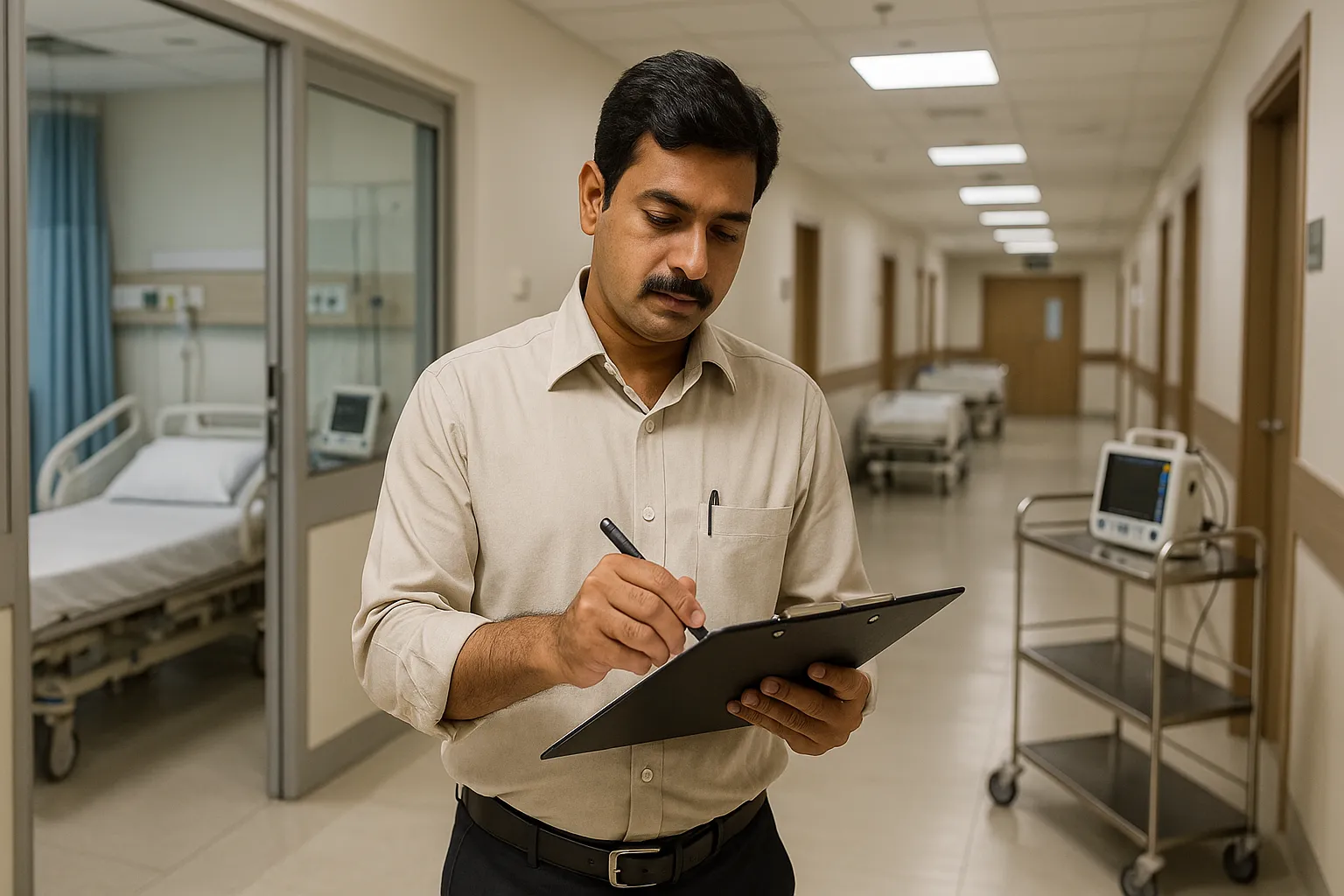

Hospital's Medical Superintendent: Meaning, Role, Duties, and How to Become One
If you have ever walked into a hospital and wondered who actually runs the place behind the scenes, the answer is usually one person: the medical superintendent. This role sits right at the point where medicine meets management, and honestly, it's one of the toughest jobs in healthcare because you have to think like a doctor and a business head at the same time.
In this article, I'll break down the medical superintendent meaning in simple terms, explain who is medical superintendent in a hospital setup, walk you through the duties of a hospital superintendent, and tell you exactly how to become medical superintendent if that's a career path you're eyeing. I'll also touch on the medical superintendent in Hindi context since many readers in India search for this specifically.
What Is a Medical Superintendent? (Medical Superintendent Meaning)
A medical superintendent is the senior-most medical officer of a hospital who is given the authority to manage both the clinical and administrative sides of the institution. He or she is a qualified doctor first, and an administrator second, which is what separates this position from a plain hospital administrator who may not hold a medical degree at all.
A Medical Superintendent is generally a qualified medical doctor responsible for supervising clinical services, medical staff, patient care quality, and healthcare operations within a hospital. Think of it as the bridge between the doctors treating patients on one side and the hospital board or owner on the other side. Without that bridge, communication between the two groups would fall apart pretty quickly.
Superintendent of Hospital vs Hospital Administrator: What's the Difference?
People often mix up these two titles, so let's clear it up. A hospital administrator usually handles the business side, things like billing, HR policies, and vendor contracts, and doesn't need to be a doctor. A superintendent in hospital settings, on the other hand, is expected to hold a medical qualification because the job demands clinical judgment on top of management skills. If you want to see exactly where this position sits among other hospital roles, this breakdown of a typical hospital organizational chart lays it out clearly.
| Aspect | Medical Superintendent | Hospital Administrator |
|---|---|---|
| Educational Background | MBBS plus a postgraduate degree in hospital management (MD, MHA, DNB, or MBA in Hospital Administration) | Can be a non-medical graduate with a degree in management or administration |
| Primary Focus | Clinical governance, patient safety, medical staff supervision, plus administration | Business operations, finance, HR, and logistics |
| Authority Over Doctors | Yes, has direct clinical authority | Limited, mostly works through department heads |
| Common in | Government hospitals, teaching hospitals, medical colleges | Corporate hospitals, private nursing homes |
Who Is a Medical Superintendent in a Hospital, Exactly?
Let's get specific about who is medical superintendent within the organizational chart. Hospital Boards appoint a Medical Superintendent and delegate to him or her most of their superintending and executive powers, including being the prime cosignatory for implementing day-to-day operations. This person becomes the point of accountability for practically everything that happens inside the building.
The medical superintendent is considered a custodian who takes charge of all patients admitted in the hospital and manages matters relating to control of hospital staff, their discipline, internal and external disasters, interaction with statutory authorities, and grievances of hospital staff to maintain continuity of healthcare. That's a lot of ground to cover, and it explains why hospitals rarely hand this title to someone without years of clinical and management experience.
Where Does the Position Fit in the Hospital Structure?
Hospitals are typically run as matrix organisations with a dual authority structure, where functional authority is separated from administrative authority. The multi-disciplinary functional authority for medical staff sits with the Medical Director, nursing functional authority sits with the Director of Nursing, while the superintending and administrative authority is vested in the Medical Superintendent of the hospital. So while doctors report clinically to their department heads or the medical director, the overall running of the hospital still funnels up through the superintendent's office.
Core Duties and Responsibilities of a Hospital Superintendent
The job description of a medical superintendent stretches across clinical, financial, legal, and human resource areas. Here's what actually lands on their desk on a regular day.
1. Clinical Oversight and Patient Care
- Supervising the quality of treatment given across departments
- Setting up and reviewing patient safety protocols
- Handling complaints related to treatment or negligence
- Coordinating with department heads on clinical policy
The medical superintendent oversees the hospital's medical operations, ensuring high standards of patient care, effective resource management, and compliance with healthcare regulations, and coordinates with medical staff and department heads while implementing hospital policies and procedures.
2. Administrative and Operational Management
- Overseeing daily hospital operations across all wings
- Managing bed allocation and occupancy planning
- Approving purchase requests for medical supplies
- Ensuring biomedical waste and infection control norms are followed
Hospitals that get these day-to-day operations right usually follow a set of established best practices in hospital management, which a good superintendent applies consistently rather than reinventing on the fly.
3. Financial Management
The superintendent must strategically distribute funds across departments to maintain service delivery and fiscal responsibility, conduct regular financial auditing for transparency, prepare accurate financial reports, and work closely with finance committees to address discrepancies. This means a good superintendent needs to be comfortable reading balance sheets, not just prescriptions.
4. Human Resource Management
The medical superintendent oversees the recruitment and training of medical and administrative staff, including designing training programs, supporting professional development, and building a positive work culture, with regular performance evaluations conducted to check that staff meet healthcare standards and hospital objectives.
4 Areas of Responsibility at a Glance
| Responsibility Area | Typical Tasks |
|---|---|
| Clinical | Patient care quality, treatment protocols, medical audits |
| Administrative | Policy implementation, staff discipline, statutory compliance |
| Financial | Budget planning, auditing, resource allocation |
| Emergency Response | Disaster management, crisis handling during outbreaks or accidents |
How to Become Medical Superintendent
If you're wondering how to become medical superintendent, know that this isn't an entry-level position. It usually takes a solid clinical foundation plus formal training in hospital management before anyone gets considered for the role.
Step 1: Complete Your MBBS
Every path to becoming a superintendent of hospital starts with an MBBS degree, since the role requires you to be a registered medical practitioner. Without this base, the clinical authority that comes with the position simply isn't available to you.
Step 2: Pursue a Postgraduate Qualification in Hospital Administration
After MBBS, most aspirants go for a specialized degree. Many professionals pursue postgraduate qualifications such as MD, MS, MBA in Hospital Administration, MHA, or a Diploma in Hospital Management, along with administrative and leadership training that significantly improves eligibility for senior management positions.
Some of the recognized routes in India include:
- MD in Hospital Administration, offered at institutes like AIIMS, PGI Chandigarh, and AFMC Pune
- DNB in Hospital Administration, a postgraduate course for doctors done after completion of MBBS, spanning three years and requiring an MBBS degree recognized by the medical council
- MHA (Master of Hospital Administration), a postgraduate course that trains candidates to manage hospitals and healthcare services, focused on the business and management side rather than clinical medicine.
Step 3: Gain Hands-On Hospital Experience
Practical work experience in a hospital or healthcare institution, preferably in an administrative capacity, is an entry requirement for many hospital administration roles, and it makes candidates familiar with the day-to-day realities of the profession while improving employability. Most people start as an Assistant Medical Superintendent or Deputy Superintendent before stepping up.
Step 4: Work Your Way Up Through Assistant and Deputy Roles
A person who has completed a Master's in Hospital Administration can typically get an entry-level job as an Assistant Medical Superintendent, or later move into a Deputy or full Medical Superintendent role. This ladder usually takes several years of consistent performance and additional certifications before reaching the top post.
Career Progression Snapshot
- MBBS graduate
- Postgraduate degree/diploma in hospital administration (MD/MHA/DNB/MBA)
- Assistant Medical Superintendent
- Deputy Medical Superintendent
- Medical Superintendent
Skills a Good Medical Superintendent Needs
Medical Superintendents require strong leadership, healthcare administration, hospital management, decision-making, communication, and problem-solving skills, and they must understand healthcare regulations, quality assurance systems, patient safety standards, and clinical governance practices, along with financial management and human resource abilities. On top of technical know-how, the person also needs a level head during emergencies since hospitals rarely give advance notice before a crisis hits.
Why This Role Matters So Much
Hospitals deal with matters of life and death, and the multi-disciplinary functional authority for medical staff is separated from the superintending and administrative authority, which sits with the Medical Superintendent, making coordination between the two sides absolutely necessary for smooth functioning. Get this coordination wrong, and patient care suffers directly. Get it right, and the entire hospital runs like it should. This is exactly why hospitals often bring in a specialized hospital project management consultancy during the planning stage itself, so these reporting lines are clear well before the facility opens its doors.
Conclusion
The medical superintendent is one of those roles that rarely gets the spotlight but keeps an entire hospital standing on its feet. From patient safety to staff discipline to budgets to disaster response, this one person ties together clinical care and hospital management under a single office. If you're a doctor thinking about this career path, the route is fairly clear: finish your MBBS, pick up a postgraduate qualification in hospital administration such as MD, MHA, or DNB, get real hands-on experience in a hospital setting, and climb up through assistant and deputy positions. It takes patience and a mix of medical and managerial skill, but for doctors who enjoy leadership as much as medicine, it's a genuinely rewarding path to pursue. And if you're a doctor thinking further ahead about running your own facility one day, it helps to first understand how doctors can start their own hospital before taking that leap.
Let’s Build Your Dream Hospital
Whether you’re planning a new hospital, expanding an existing facility, or upgrading your healthcare technology, Actiss Healthcare is here to guide you every step of the way. Let us help you turn your vision into reality. Contact us today for a free consultation & learn more about our services and how we can support your next healthcare project.

Frequently Asked Questions
1. What is the medical superintendent meaning in simple words?
A medical superintendent is the senior doctor in charge of running a hospital's clinical and administrative functions together, acting as the link between medical staff and the hospital's governing board.
2. Who is medical superintendent in a government hospital?
In government hospitals, the medical superintendent is usually a senior MBBS-qualified doctor with additional training in hospital administration, appointed by the health department to head both patient care operations and hospital management.
3. Is a medical superintendent the same as a hospital superintendent?
Yes, in most cases, "medical superintendent" and "hospital superintendent" refer to the same position. Some private hospitals may separate the titles, keeping a medical superintendent for clinical matters and a hospital administrator for business functions.
4. How to become medical superintendent after MBBS?
After MBBS, candidates typically pursue an MD, MHA, DNB, or MBA in Hospital Administration, gain practical experience through assistant or deputy superintendent roles, and then get promoted to the full medical superintendent position based on experience and performance.
5. What qualifications are needed to become a superintendent of hospital?
An MBBS degree is the baseline requirement, followed by a postgraduate qualification in hospital administration such as MD (Hospital Administration), MHA, DNB, or an MBA focused on healthcare management.
6. What does medical superintendent mean in Hindi?
In Hindi, medical superintendent translates to "चिकित्सा अधीक्षक" (Chikitsa Adheekshak), a designation commonly used in Indian government and public sector hospitals.