
Value Engineering in Hospital Projects: How to Cut Costs Without Cutting Quality
Hospital construction is one of the most expensive and high-stakes building categories out there. You're not just putting up walls and a roof. You're creating an environment where people's lives depend on how well every system functions. So when budgets get tight (and in healthcare construction, they almost always do), the pressure to cut costs can feel enormous. But here's the thing: cutting costs and cutting quality are not the same thing. That's exactly where value engineering (VE) comes in.
If you've heard the term thrown around at project meetings and weren't entirely sure what it actually means in practice, you're not alone. Value engineering is often misunderstood as a fancy way of saying "do it cheaper." In reality, it's a disciplined, structured process focused on getting the most functional output for every dollar spent. Done right, it protects quality, improves long-term performance, and keeps hospital projects financially viable without gutting what makes them great.
In this article, we're going to break down how value engineering works in hospital projects, when to use it, which specific strategies deliver real savings, and what to watch out for so you don't end up doing more harm than good.
What Is Value Engineering, Really?
Value engineering is a systematic method used to analyze project components, including materials, systems, layouts, and equipment, with the goal of finding alternatives that deliver the same (or better) function at a lower cost. The concept dates back to World War II, when an engineer named Lawrence D. Miles at General Electric developed the approach as a way to work around material shortages without compromising product performance. Since then, it's been widely adopted across construction, manufacturing, and project management industries. You can read more about its formal methodology through SAVE International, the leading professional body for value engineering practitioners worldwide.
In healthcare construction specifically, VE means carefully evaluating design choices, building materials, mechanical systems, and construction methods to identify where spending can be reduced without affecting patient safety, clinical functionality, or operational efficiency. A strong foundation in hospital planning and designing is what makes a meaningful VE exercise possible in the first place, because you can't evaluate what to change until you fully understand what every element is supposed to do. The core principle is simple: value = function ÷ cost. You can increase value either by improving function, reducing cost, or ideally both at once.
What value engineering is not is a last-minute panic response to a blown budget. When teams treat it that way, scrambling to slash line items after the design is nearly complete, they almost always end up sacrificing real quality to meet an arbitrary number. True value engineering starts early and stays collaborative throughout the project lifecycle.
Why Value Engineering Matters So Much in Hospital Projects Right Now
The financial reality facing healthcare construction today is genuinely difficult. According to the 2024 Hospital Construction Survey conducted by Health Facilities Management magazine, published by the American Society for Health Care Engineering (ASHE), nearly half of healthcare respondents have seen construction cost increases and delays on 76% to 100% of their recent projects. Hospital construction costs in Texas alone reportedly went up 30 to 40% over a three-to-four-year span. That's not a rounding error. That's a crisis level of cost pressure.
The same survey found that 56% of hospital construction respondents have used value engineering as a direct response to current construction challenges. Meanwhile, 65% reduced project scope. The problem? Scope reduction means you end up with a smaller or less capable facility. Value engineering, done correctly, offers a smarter alternative. You keep the scope, but you find more cost-effective ways to deliver it.
On top of cost escalation, hospitals face supply chain disruptions, skilled labor shortages, and rising equipment lead times. In this environment, knowing how to extract maximum value from every budget dollar isn't just helpful. It's essential for getting projects across the finish line at all.
The 6 Phases of the Value Engineering Process in Hospital Construction
A proper value engineering effort is organized and methodical. Here's how the process typically unfolds on a hospital project:
1. Information Phase
The team gathers all relevant project data including design plans, specifications, cost estimates, operational requirements, and regulatory constraints. In healthcare, this phase also means understanding clinical workflows, infection control requirements, and patient safety standards. You can't evaluate alternatives without fully understanding what the project actually needs to accomplish.
2. Function Analysis
Every component, system, and design feature is evaluated based on its function. The key question here is: "What does this element need to do?" Separating function from form allows the team to identify where expensive choices are being made for aesthetic or habitual reasons rather than genuine performance requirements.
3. Creative Phase
This is the brainstorming stage where the full project team, including architects, engineers, contractors, healthcare facility managers, and clinical staff, generates alternatives. No idea is immediately rejected. The goal is to produce a wide range of options that could potentially deliver the same function at lower cost.
4. Evaluation Phase
Alternatives from the creative phase are assessed against performance criteria, safety standards, regulatory requirements, life cycle cost, and constructability. In hospital projects, any change that might compromise patient safety, infection control, or code compliance is automatically eliminated at this stage.
5. Development Phase
The most promising alternatives are developed into detailed proposals with cost estimates, technical specifications, and projected savings. These proposals need to be specific and actionable, not vague suggestions.
6. Presentation and Implementation
Proposals are presented to the project owner and key stakeholders for review and decision-making. Approved changes are integrated into the project design and tracked throughout construction to ensure the expected savings are actually realized.
Let’s Build Your Dream Hospital
Whether you’re planning a new hospital, expanding an existing facility, or upgrading your healthcare technology, Actiss Healthcare is here to guide you every step of the way. Let us help you turn your vision into reality. Contact us today for a free consultation & learn more about our services and how we can support your next healthcare project.

Key Value Engineering Strategies That Work in Hospital Projects
Standardizing Patient Room Layouts
One of the most consistently effective VE strategies in hospital construction is standardizing patient room configurations. When every room follows the same basic layout, you reduce design complexity, simplify construction, speed up installation of plumbing and electrical systems, and make future maintenance significantly easier. This standardization also benefits nursing staff, who can orient quickly in any room, which is a real operational advantage in high-acuity situations.
Prefabrication and Modular Construction
Prefabricated components, including headwalls, bathroom pods, and MEP (mechanical, electrical, and plumbing) assemblies, are manufactured off-site in controlled environments and then installed on-site in a fraction of the time traditional construction requires. Healthcare design firms and construction companies have been leaning into this approach heavily in recent years. According to Healthcare Design's 2024 A/E/C Survey, firms cited prefabrication and modular building solutions as one of the top tactics for achieving project savings, specifically because they provide faster deployment, better quality control, and lower labor costs all at once.
Life Cycle Cost Analysis Instead of Lowest Bid Thinking
This is one area where hospital owners sometimes make expensive mistakes. Selecting the cheapest upfront option often results in higher maintenance costs, more frequent replacements, and higher energy bills over the life of the building. Value engineering insists on evaluating total cost of ownership. A solid understanding of CAPEX vs OPEX in healthcare projects is critical here, because the decision to invest more upfront in energy-efficient HVAC systems, for instance, can generate substantial savings on energy bills over a 20-to-30-year operational period. The same logic applies to flooring materials, lighting systems, and roofing.
Target Value Design (TVD)
Target value design flips the traditional design-then-estimate approach on its head. Instead of designing the facility and then figuring out what it costs, TVD starts with the budget as a firm constraint and works backward. Architects, engineers, and contractors collaborate from the very beginning with cost as a design parameter rather than an afterthought. This approach prevents the classic scenario where a team spends months designing a hospital only to discover it's 20% over budget and then has to frantically cut things.
Reviewing MEP Systems for Over-Engineering
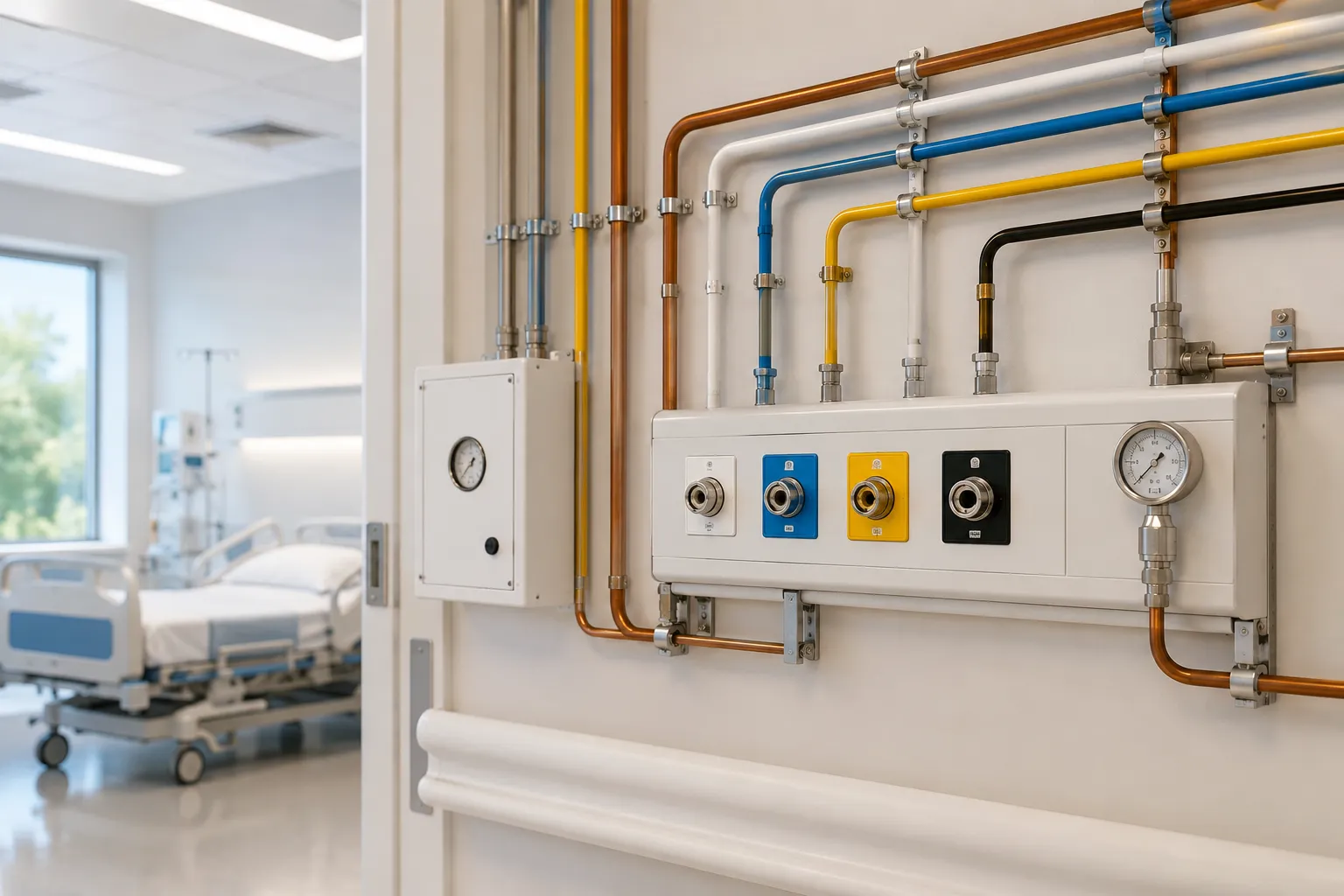
Mechanical, electrical, and plumbing systems are consistently among the most expensive components of any hospital project, and also among the most commonly over-engineered. Engineers sometimes default to conservative specifications out of habit, or simply because "that's how we've always done it." A proper VE review of MEP systems can identify where redundancy is genuinely required for patient safety versus where it's simply over-specified. Our detailed guide on hospital MEP systems planning covers the critical decision points every project team should work through before finalizing specifications. The savings from right-sizing these systems can be significant without any compromise to clinical function.
Digital Wayfinding Over Physical Renovation
Wayfinding, which means helping patients, visitors, and staff navigate through a hospital, has traditionally been addressed through architectural modifications like widened corridors, signage systems, and layout redesigns. In recent VE case studies, implementing digital wayfinding systems with interactive kiosks has proven to be a far more cost-effective solution. Rather than spending on expensive structural changes, digital systems can be deployed quickly, updated easily, and expanded as the facility grows.
Code-Derived Construction Options
This is a VE opportunity that many hospital owners never even consider. Building codes often provide multiple compliance pathways, and some are far less expensive than others. According to Health Facilities Management, owners can reduce unnecessary spending simply by reading applicable codes carefully and selecting the most cost-effective compliant option for their specific facility type and project. A thorough code review combined with a risk assessment by a qualified team can uncover real savings without touching the design at all.
VE in Hospital Projects: Comparing Common Approaches
| VE Strategy | Primary Benefit | Best Applied During | Risk Level |
|---|---|---|---|
| Patient Room Standardization | Lower construction & maintenance costs | Design development | Low |
| Prefabrication / Modular | Faster schedule, less labor cost | Schematic design | Low |
| Life Cycle Cost Analysis | Lower operational costs long-term | Early design | Low |
| Target Value Design | Budget-aligned design from day one | Pre-design / planning | Low |
| MEP System Right-Sizing | Significant cost reduction in systems | Design development | Medium |
| Code-Derived Options | Reduces unnecessary compliance costs | Planning / design | Low (with expert review) |
| Digital Wayfinding Systems | Avoids expensive structural changes | Design / construction | Low |
| Material Substitutions | Direct material cost reduction | Design or construction | Medium-High |
When Value Engineering Goes Wrong and How to Avoid It
Let's be honest: VE has a complicated reputation in hospital construction, and not without reason. When it's applied poorly, it absolutely does erode quality. Here are the most common failure modes and how experienced teams avoid them:
Starting Too Late
The later in the project cycle VE is applied, the less effective it becomes and the more disruptive. A VE exercise launched after construction documents are complete is mostly firefighting. The sweet spot for maximum impact is during schematic design and design development. Timing is everything. Changes made on paper cost a fraction of changes made in the field. One of the most consistent patterns seen in projects that run into budget trouble is that VE was never part of the early conversation. Many of these same patterns are discussed in detail in our resource on common hospital budget mistakes that derail projects before construction even begins.
Excluding Key Stakeholders
VE conducted only by contractors trying to find cheaper substitutes, without input from the owner, clinical staff, facilities management, and the design team, tends to produce recommendations that save money on paper but create problems in operation. For a hospital addition project in California, bringing together the design team, owner representatives, facilities staff, user group representatives, and independent outside reviewers for a dedicated two-day VE work session produced far better results than a typical quick cost-reduction meeting would have.
Confusing VE with Scope Reduction
Scope reduction means you build less or do less. VE means you achieve the same outcome more efficiently. These are fundamentally different things. Removing an entire patient care unit from a project to meet budget is scope reduction. Finding a way to build the same unit at lower cost is value engineering. Hospital leaders and project managers need to be clear about which tool they're actually using and why.
Ignoring Non-Negotiable Requirements
In hospital construction, patient safety and infection control are non-negotiable. Any VE proposal that touches these areas needs to go through rigorous clinical and regulatory review before even being considered. Switching a floor material, for example, sounds minor, but in a surgical suite, the wrong surface can have real infection control implications. Every alternative must still meet strict safety and performance standards. This connects directly to the broader principles of quality assurance and quality control in hospital projects, which should always run in parallel with any active VE effort.
The Role of Collaboration in Successful Hospital VE
The best value engineering outcomes in healthcare projects are almost always the result of genuine collaboration across disciplines. Architects bring design expertise and spot VE opportunities in planning stages. Engineers provide the technical analysis to confirm whether alternatives perform as needed. Healthcare professionals, including nurses, clinical managers, and infection control specialists, ensure that proposed changes don't interfere with patient care workflows. Contractors bring real-world constructability knowledge and current market pricing that designers often don't have access to in isolation.
When these groups work in silos, VE exercises tend to produce mediocre results. When they work together from early in the process, the results can be genuinely impressive. This is why working with a qualified hospital project management consultancy plays such a critical role in organizing and facilitating VE across all project stakeholders. It's a team sport, and every position matters.
Practical VE Checklist for Hospital Project Teams
- Start VE discussions during pre-design or early schematic design, not after documents are complete.
- Assemble a cross-disciplinary team that includes clinical end-users, not just design and construction professionals.
- Evaluate all MEP systems for over-specification before finalizing design.
- Conduct a thorough code review to identify less expensive compliant alternatives.
- Analyze life cycle costs, not just first costs, for major material and system choices.
- Consider prefabrication for bathrooms, headwalls, and MEP assemblies early in design.
- Standardize patient room layouts wherever clinical requirements allow.
- Document all VE proposals and decisions for future reference and lessons learned.
- Never approve a VE substitution that hasn't been reviewed against infection control and patient safety standards.
- Track actual savings from approved VE items throughout construction to verify projected results.
Conclusion
Value engineering in hospital projects is one of the most powerful tools available for keeping healthcare construction financially viable without sacrificing what matters most: patient safety, clinical function, and long-term operational performance. The key is understanding what VE actually is (a structured, collaborative, function-based analysis) versus what it's often mistaken for (a last-minute cost-cutting scramble). When hospital owners, architects, engineers, contractors, and clinical staff work together early and consistently throughout the design process, value engineering produces real savings and often better outcomes than the original design would have delivered. In a healthcare construction market where costs have climbed 30 to 40% in recent years and half of all projects face budget overruns, that kind of discipline isn't optional. It's how responsible hospital projects get built.
Frequently Asked Questions (FAQs)
1. What is the difference between value engineering and scope reduction in hospital projects?
Scope reduction means delivering a smaller or less capable facility, essentially removing elements from the project entirely. Value engineering means finding smarter, more cost-effective ways to deliver the same scope. For example, removing a patient care wing is scope reduction. Redesigning the wing's structural system to use prefabricated components at lower cost is value engineering. Both may reduce spending, but only VE does so without compromising what the hospital actually set out to build.
2. When is the best time to apply value engineering on a hospital project?
The earlier, the better. VE is most impactful during pre-design and schematic design, when changes can be made on paper without disrupting completed work. Design development is still a good window. Once construction documents are finalized or construction is underway, VE becomes far more disruptive and the potential savings shrink significantly. Late-stage VE also tends to produce more quality compromises because there are fewer good alternatives left to evaluate.
3. How do you make sure value engineering doesn't compromise patient safety?
Every VE proposal in a hospital project should be evaluated against patient safety requirements, infection control standards, and applicable building and healthcare codes before it's approved. Clinical staff, infection control specialists, and regulatory consultants should be part of the review process for any changes that affect patient care areas. If a proposed change cannot pass that review, it doesn't get implemented, regardless of how much it might save on paper.
4. Can value engineering be applied to existing hospitals, or only new construction?
VE absolutely applies to existing hospital renovation and infrastructure upgrade projects, not just new construction. Renovation projects often offer more VE opportunities than new builds because teams can evaluate existing systems, identify what's underperforming, and apply modern, more cost-effective solutions. The 2025 Hospital Construction Survey found that renovation projects are actually increasing as a share of healthcare capital budgets, making VE even more relevant for existing facility improvements.
5. What types of hospital project components typically offer the most VE savings?
Mechanical, electrical, and plumbing (MEP) systems tend to offer the largest VE savings opportunities because they are often over-engineered and represent a major share of total project cost. Reviewing the full hospital project cost per bed helps owners and planners understand where cost pressure is most concentrated and direct VE efforts to where they'll have the greatest impact. Patient room layouts and finishes, structural systems, and building envelope choices also offer meaningful savings potential. Digital systems like wayfinding and building automation frequently provide better function at lower cost compared to purely physical solutions.