
Medical Gas Pipeline System Safety Norms and Guidelines: A Complete Hospital Guide
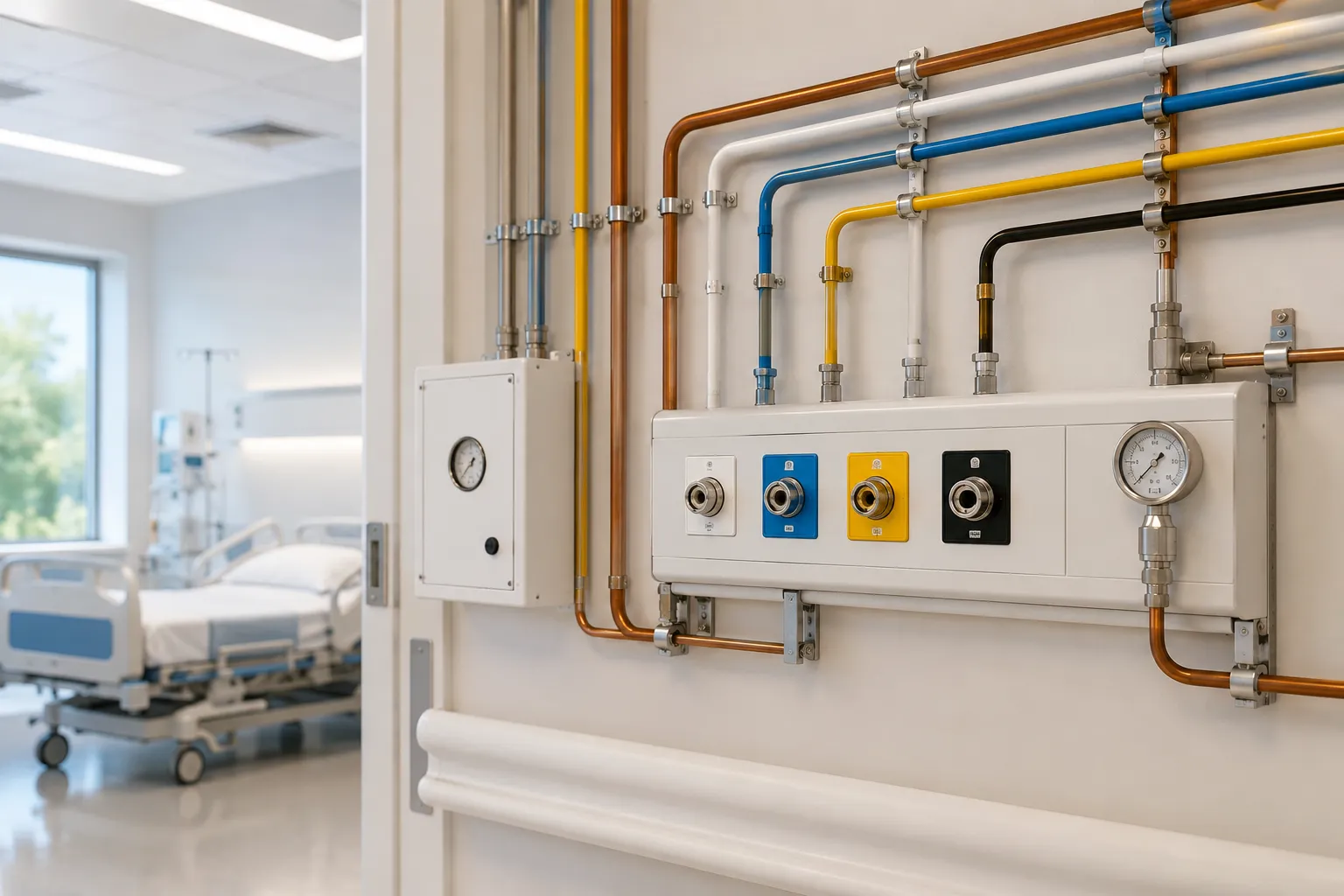
If you have ever walked through a hospital corridor and noticed rows of colored copper pipes running along the ceiling, you have already seen a medical gas pipeline system in action. This network quietly does one of the most important jobs in any hospital: it carries oxygen, nitrous oxide, medical air, and vacuum directly to patient beds, operation theaters, and ICUs. Get it wrong, and the consequences can be fatal. Get it right, and it saves lives every single day without anyone even noticing it is there. In this article, we will break down what a medical gas pipeline system in hospitals actually is, why safety norms exist around it, and what guidelines hospitals need to follow to keep patients and staff safe.
What Is MGPS? Understanding the MGPS Full Form
The MGPS full form is Medical Gas Pipeline System. It is a centralized network of pipes, valves, alarms, and outlets that transports medical gases from a central storage point (like a manifold room or bulk oxygen tank) straight to patient care areas such as wards, ICUs, operation theaters, and emergency rooms. Instead of wheeling individual gas cylinders from bed to bed, hospitals rely on this piped system for a constant, reliable, and controlled gas supply.
A typical medical gas pipeline system in hospitals handles oxygen, nitrous oxide, medical air, nitrogen, carbon dioxide, and vacuum lines, along with waste anesthetic gas disposal in some facilities. In many Indian hospitals, the network usually covers oxygen, medical air, and vacuum, since these three are used the most frequently across departments. Getting this system right actually starts much earlier than installation, right at the stage of hospital planning and designing, where engineers map out gas flow, zoning, and outlet placement before a single pipe goes into the wall.
Why Medical Gas Pipeline Systems Matter So Much in Hospitals
Think about a patient on ventilator support. If the oxygen supply drops or stops even for a few minutes, that patient's life is at risk. This is exactly why MGPS design follows strict, risk-based rules rather than casual plumbing standards. A properly built and maintained system guarantees a steady flow of the right gas, at the right pressure, to the right location, without any cross-connection between different gases.
Cross-connection, where one gas accidentally mixes with or is misrouted into another gas line, is one of the biggest dangers in this setup. That is why every part of a medical gas pipeline system, from the pipe fittings to the wall outlets, is gas-specific and physically incapable of connecting to the wrong gas type.
Key Components of a Medical Gas Pipeline System
Before we get into the safety norms, it helps to know what actually makes up this system. Here are the core parts you will find in almost every hospital setup:
- Source equipment – bulk liquid oxygen tanks, cylinder manifolds, and medical air compressors that generate or store the gas supply
- Pipe network – dedicated copper pipes for each gas, running through walls and ceilings to different departments
- Pressure regulators and alarms – devices that monitor gas pressure and flow, warning staff instantly if something goes wrong
- Zone valves – shut-off points that let staff isolate a specific area during a leak, fire, or maintenance work without affecting the rest of the hospital
- Outlet and inlet assemblies – the wall-mounted terminal units where gas is delivered or vacuum is applied at the bedside
Let’s Build Your Dream Hospital
Whether you’re planning a new hospital, expanding an existing facility, or upgrading your healthcare technology, Actiss Healthcare is here to guide you every step of the way. Let us help you turn your vision into reality. Contact us today for a free consultation & learn more about our services and how we can support your next healthcare project.

Safety Norms and Guidelines for Medical Gas Pipeline Systems
Hospitals cannot just build an MGPS however they like. There are specific codes and standards that govern design, installation, testing, and daily operation. Let's look at the major ones followed globally and in India.
NFPA 99: The US Benchmark
The National Fire Protection Association's NFPA 99, known as the Health Care Facilities Code, is one of the most widely referenced standards for medical gas systems. Rather than forcing every hospital to follow one rigid method, it requires facilities to assess the impact of potential system failures and then put safeguards in place to prevent issues or manage emergencies that may arise. This gives hospitals room to adapt to their own layout and patient load while still meeting strict safety outcomes.
NFPA 99 classifies healthcare facilities into risk categories based on what would happen if the gas supply failed:
| Category | Risk Level | What Happens If the System Fails |
|---|---|---|
| Category 1 | Highest risk | Failure is likely to cause major injury or death to patients or caregivers |
| Category 2 | Moderate risk | Failure is likely to cause minor injury to patients or caregivers |
| Category 3 | Low risk | Failure is not likely to cause injury, but may cause patient discomfort |
| Category 4 | Minimal risk | Failure would have no real impact on patient care |
Areas like ICUs and operation theaters fall under Category 1, which means they require continuous monitoring, backup redundancy, and instant alarm response. Lower category spaces need basic safety measures and routine maintenance without continuous monitoring or advanced redundancy.
ISO 7396-1 and HTM 02-01
Outside the US, hospitals commonly follow ISO 7396-1, an international standard specifically covering the design, installation, and testing of medical gas pipeline systems. In the UK, the Health Technical Memorandum HTM 02-01 serves a similar purpose, laying out detailed engineering and safety requirements for NHS hospitals.
Indian Standards: IS 7396 and NABH Accreditation
In India, MGPS design must follow IS 7396 to withstand pressure at every section of the oxygen piping system, alongside references to NFPA 99 and HTM for additional guidance. Hospitals seeking NABH accreditation must also meet its safety benchmarks around gas storage, piping, alarms, and staff protocols. If you are preparing for certification, our step-by-step guide to the NABH accreditation process walks through exactly what assessors look for, including medical gas safety compliance.
Color Coding: A Simple But Critical Safety Layer
One of the easiest ways to prevent a dangerous mix-up is color coding. Every gas pipe and cylinder is painted or banded in a fixed color so that anyone, from a technician to a nurse, can identify the gas at a glance. However, these colors are not the same everywhere in the world, which is exactly why staff working across regions need to double-check local codes. We have covered this in detail in our guide on medical gas pipeline colour codes, including full comparison charts for India, the UK, and the US.
| Gas | India (ISO Color Code) | US (NFPA 99 / CGA) |
|---|---|---|
| Oxygen | White | Green |
| Nitrous Oxide | Blue | Light Blue |
| Medical Air | Black & White | Yellow |
| Vacuum | Yellow | White |
Essential Safety Practices Every Hospital Must Follow
1. Installation Safety
Installation is where most long-term risks either get built in or avoided entirely. Pipes must be blown clean of dust and debris before use, and every joint, valve, and outlet has to be pressure-tested for leaks. Non-interchangeable connectors, as required under NFPA 99, physically prevent the wrong gas hose or cylinder from being connected to the wrong outlet, which removes a huge chunk of human error from the equation.
2. Testing and Commissioning
Before any medical gas system goes live, it must pass thorough purge and pressure testing to confirm the piping and components are clean, leak-free, and fully compliant. This testing has to be carried out and signed off by qualified personnel, not just general contractors, since even a small oversight here can turn into a patient safety incident months later. Our hospital commissioning checklist covers this stage in more depth for teams preparing to open a new facility.
3. Ongoing Monitoring and Maintenance
An MGPS is not a install-and-forget system. Hospitals need automated alarms that flag pressure drops, purity issues, or valve failures the moment they happen. Preventive maintenance should follow set intervals, such as replacing diaphragm valves every five years and calibrating transducers on a quarterly basis. Some hospitals also run digital dashboards that track system health against NFPA 99 pass and fail thresholds in real time.
Typical gas pressures worth remembering: oxygen and nitrous oxide usually run between 50 and 55 psig, while vacuum lines sit around 12 to 15 inHg. Any deviation beyond roughly plus or minus 15 percent should trigger an immediate alarm and inspection.
4. Zone Valve Placement and Emergency Isolation
Zone valves are placed strategically so that if a leak or fire breaks out in one wing, staff can shut off gas flow to that specific area without disrupting supply to the rest of the hospital. These valves must be clearly labeled, unobstructed, and accessible at all times, ideally with a map or chart posted nearby showing which valve controls which zone. Since oxygen-enriched areas carry a real fire risk, it is worth pairing this with a broader look at your facility's hospital fire safety compliance plan.
5. Staff Training and Emergency Preparedness
Even the best-engineered system fails if the people operating it don't know what to do during an alarm. Nurses, technicians, and facility engineers all need regular training on gas outlet identification, alarm response, and manual shut-off procedures. Manifold rooms, in particular, should be manned around the clock or fitted with remote monitoring, since this is the heart of the entire gas supply chain.
Common Risks in Medical Gas Pipeline Systems
| Risk | Cause | Prevention |
|---|---|---|
| Cross-connection of gases | Wrong fittings or human error during maintenance | Gas-specific, non-interchangeable connectors and outlets |
| Pressure drop | Leaks, valve failure, or supply exhaustion | Continuous pressure alarms and backup cylinder reserves |
| Contamination | Poor pipe cleaning during installation | Mandatory purge testing before commissioning |
| Fire or explosion | Oxygen-enriched environment near ignition sources | Restricted access, proper labeling, and no-smoking zones near manifolds |
| Delayed emergency response | Untrained staff or poorly labeled valves | Regular drills and clear zone valve signage |
A Quick Compliance Checklist for Hospitals
- Is the system designed and installed as per IS 7396, NFPA 99, ISO 7396-1, or HTM 02-01, depending on your region?
- Are all pipes color-coded and labeled at regular intervals, including at branches and wall penetrations?
- Have zone valves been tested and are they clearly accessible for emergency isolation?
- Is there a documented preventive maintenance schedule for valves, alarms, and transducers?
- Are outlet stations tested periodically to confirm there is no possibility of cross-connection?
- Is manifold room access restricted, monitored, and free of fire hazards?
- Are staff trained on emergency shut-off procedures and alarm response?
Conclusion
A medical gas pipeline system might be hidden inside hospital walls, but the safety it provides sits right at the center of patient care. From oxygen therapy to anesthesia delivery, this network has to work correctly every single time, with zero room for error. Following recognized safety norms like NFPA 99, ISO 7396-1, IS 7396, and HTM 02-01 isn't just about ticking a compliance box. It is what keeps patients on ventilators breathing, keeps surgeries running smoothly, and keeps hospital staff safe from gas-related accidents. If you are planning a new facility or upgrading an existing one, working with an experienced hospital project consultancy can help you get MGPS design and compliance right from day one, rather than fixing costly mistakes later.
Let’s Build Your Dream Hospital
Whether you’re planning a new hospital, expanding an existing facility, or upgrading your healthcare technology, Actiss Healthcare is here to guide you every step of the way. Let us help you turn your vision into reality. Contact us today for a free consultation & learn more about our services and how we can support your next healthcare project.
Frequently Asked Questions
1. What is the MGPS full form in hospitals?
MGPS stands for Medical Gas Pipeline System. It refers to the network of pipes, valves, and outlets that delivers medical gases like oxygen, nitrous oxide, and vacuum directly to patient care areas.
2. Which gases are typically part of a medical gas pipeline system in hospitals?
Most systems handle oxygen, nitrous oxide, medical air, nitrogen, carbon dioxide, and vacuum. In many Indian hospitals, the setup mainly covers oxygen, medical air, and vacuum lines.
3. What standards govern medical gas pipeline system safety?
The major standards include NFPA 99 in the US, ISO 7396-1 internationally, HTM 02-01 in the UK, and IS 7396 in India, along with NABH accreditation requirements for Indian hospitals.
4. Why is color coding important in MGPS?
Color coding lets staff instantly identify which pipe carries which gas, reducing the risk of connecting a patient to the wrong gas source. Codes differ between countries, so hospitals must follow the standard applicable to their region.
5. How often should medical gas pipeline systems be inspected?
Inspection frequency depends on the component, but common practice includes quarterly transducer calibration, five-year diaphragm valve replacement, and continuous automated pressure and purity monitoring for high-risk areas like ICUs.
6. What happens if a hospital's medical gas pipeline system fails?
The impact depends on the NFPA 99 risk category of the area affected. In Category 1 spaces like ICUs or operation theaters, a failure can be life-threatening, which is why these zones require redundancy, real-time alarms, and rapid isolation valves.