
Single-Specialty vs. Multi-Specialty Hospital: Which Is Right for You?
Picking the right hospital can feel like one of the most stressful decisions you ever make, especially when you or a loved one is already dealing with a health scare. You have probably come across two broad types of hospitals: single-specialty hospitals and multi-specialty hospitals. But what do those terms actually mean? And more importantly, which one gives you the best shot at the care you need?
Let us walk through everything you need to know, side by side, so you can make a confident and informed choice.
What Is a Single-Specialty Hospital?
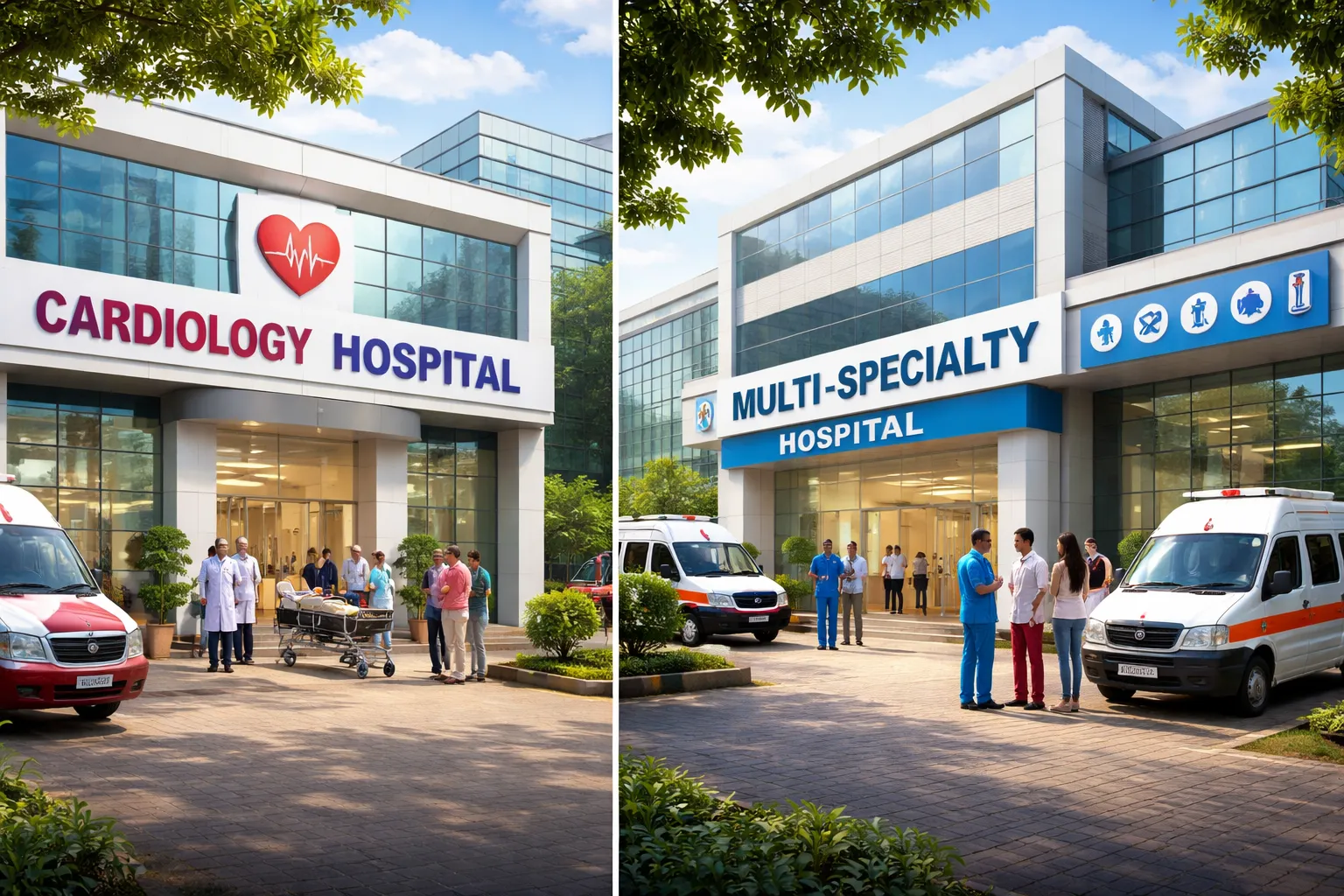
A single-specialty hospital focuses entirely on one field of medicine. Think of a dedicated heart hospital, an orthopedic hospital, a cancer center, or an eye care hospital. Every doctor, nurse, technician, and piece of equipment in that building exists for one specific purpose.
These facilities have been growing in popularity over the past two decades. If you want to understand how this fits into the broader picture, it helps to first look at how different hospital business models are structured and what drives each one. Patients who need a hip replacement, for example, may prefer to go to an orthopedic-only hospital rather than a large general hospital where orthopedic care is just one department among dozens.
Common Types of Single-Specialty Hospitals
- Cardiac (heart) hospitals
- Orthopedic and spine hospitals
- Cancer treatment centers
- Eye and vision hospitals
- Women's health and maternity hospitals
- Children's hospitals
- Psychiatric and behavioral health hospitals
- Rehabilitation hospitals
What Is a Multi-Specialty Hospital?
A multi-specialty hospital covers a wide range of medical disciplines under one roof. Cardiology, neurology, orthopedics, oncology, gastroenterology, and more are all available in the same building. These are the large hospitals most people picture when they think of going to the hospital.
If you come in with chest pain and doctors also find signs of diabetes and kidney stress, a multi-specialty hospital has the right team to address all three at once. That kind of cross-specialty coordination is where these hospitals genuinely shine.
Common Departments Found in Multi-Specialty Hospitals
- Cardiology and cardiac surgery
- Neurology and neurosurgery
- Orthopedics and sports medicine
- Oncology and radiation therapy
- Pulmonology and critical care
- Nephrology and urology
- Gastroenterology
- Obstetrics and gynecology
- Pediatrics
- Emergency medicine
Single-Specialty vs. Multi-Specialty Hospital: Head-to-Head Comparison
| Factor | Single-Specialty Hospital | Multi-Specialty Hospital |
|---|---|---|
| Focus | One medical field | Multiple medical fields |
| Expertise depth | Very high in one area | Broad, varies by department |
| Equipment | Highly specialized tools | Wide range of general and specialized tools |
| Coordination for complex cases | Limited | Strong cross-department coordination |
| Emergency care | Usually limited to its specialty | Full emergency department available |
| Wait times | Often shorter for planned procedures | Can be longer due to high patient volume |
| Cost | Often lower for specialty procedures | Can be higher, especially for longer stays |
| Patient experience | Very condition-specific and personal | More generalized, larger scale |
| Best for | Planned, condition-specific treatments | Complex, multi-system, or emergency cases |
Advantages of Choosing a Single-Specialty Hospital
1. Deeper Expertise in One Area
When every single physician and staff member at a hospital works in the same specialty, the collective knowledge becomes very concentrated. A cardiac surgeon at a dedicated heart hospital performs heart procedures day in and day out. Studies published by the National Bureau of Economic Research have shown that higher procedure volume is directly linked to better patient outcomes. You are not a general case. You are exactly what that hospital was built for.
2. Purpose-Built Equipment and Facilities
Single-specialty hospitals invest heavily in the specific tools their patients need. An orthopedic hospital, for instance, may have state-of-the-art robotic surgery systems, specialized operating rooms, and recovery facilities designed entirely around musculoskeletal recovery. This level of focus is only possible when hospital planning and design is built around a single clinical purpose from the very start, rather than being retrofitted into a general-use building. That kind of setup would simply not be possible in a large general hospital where resources are spread across many departments.
3. Faster, More Streamlined Care
Because the hospital processes one type of patient, the intake process, pre-operative protocols, surgical routines, and post-operative care are all refined and efficient. Patients often report shorter wait times and a more personalized experience at specialty hospitals compared to large general hospitals.
4. Lower Infection Risk for Certain Cases
Single-specialty hospitals, especially surgical ones, tend to see fewer patients with severe infectious diseases compared to large general hospitals. This can reduce the risk of hospital-acquired infections (HAIs) for patients who come in for elective or planned procedures.
5. Higher Patient Satisfaction Scores
The focused environment often leads to a more attentive and calm experience. Nurses and staff are not bouncing between patients with wildly different needs. That consistency matters, and it shows up in patient satisfaction surveys consistently over the years. It is no coincidence that patient-centered hospital design principles are most consistently applied in facilities built around a single specialty.
Disadvantages of Single-Specialty Hospitals
1. Limited Scope When Problems Get Complicated
Here is the real catch. If you go in for a knee replacement and your heart rate spikes during surgery, a single-specialty orthopedic hospital may not have the cardiac specialists or ICU capacity to handle that emergency. You could end up being transferred, which adds risk and time during a critical moment.
2. Not Designed for Emergency Care
Most single-specialty hospitals do not have a full emergency department. If you walk in with something outside their scope, they simply cannot treat you. That means you need to be very sure of your diagnosis before choosing this type of facility.
3. Insurance and Coverage Gaps
Not all insurance plans cover single-specialty hospitals equally. Some plans may classify them differently, and patients can face unexpected out-of-pocket costs. Always verify your coverage before committing.
Advantages of Choosing a Multi-Specialty Hospital
1. One-Stop Care for Complex Conditions
If you have multiple health issues, or if your condition affects more than one body system, a multi-specialty hospital is genuinely hard to beat. You do not have to drive to separate clinics or coordinate between different records systems. Your entire care team is under one roof, and they can talk to each other directly.
2. Full Emergency Capabilities
Multi-specialty hospitals have 24/7 emergency departments staffed with physicians trained across multiple disciplines. Whether it is a stroke, a cardiac event, a trauma injury, or a sudden infection, these hospitals are equipped to respond immediately and comprehensively.
3. Advanced Diagnostic Tools Across All Areas
Large multi-specialty hospitals typically have MRI, CT scanners, nuclear medicine, pathology labs, and endoscopy suites all in one place. Getting a diagnosis does not require referrals out. It all happens within the same campus, often on the same day. Managing and selecting this range of technology is a significant undertaking, which is why many hospital builders work with a healthcare technology consultancy to get the equipment mix right from the outset.
4. Teaching Hospitals and Research Access
Many multi-specialty hospitals are affiliated with medical universities and are active research centers. This gives patients access to clinical trials, the latest treatment protocols, and physicians who are actively publishing and advancing their fields.
5. Better Safety Net for Unexpected Complications
Life does not follow a script. A patient admitted for a liver issue may develop a cardiac complication. Multi-specialty hospitals are built to handle exactly these unpredictable scenarios. The safety net is wider, and that matters.
Disadvantages of Multi-Specialty Hospitals
1. Longer Wait Times
Because they serve a much larger and more varied patient population, multi-specialty hospitals often have longer wait times, both in emergency settings and for scheduled procedures. For non-urgent, planned surgeries, this can be genuinely frustrating.
2. Higher Costs
The overhead of running dozens of departments, maintaining large facilities, employing a huge staff, and keeping advanced equipment in every specialty comes at a price. Multi-specialty hospitals often charge more for the same procedure compared to a focused specialty center.
3. Less Personalized Experience
When you are one of thousands of patients passing through a massive hospital system, it is harder to build a close relationship with your care team. You may see different physicians during a single stay, and the continuity of care can sometimes feel fragmented.
Let’s Build Your Dream Hospital
Whether you’re planning a new hospital, expanding an existing facility, or upgrading your healthcare technology, Actiss Healthcare is here to guide you every step of the way. Let us help you turn your vision into reality. Contact us today for a free consultation & learn more about our services and how we can support your next healthcare project.

Which Type of Hospital Should You Choose? Key Questions to Ask Yourself
Do you have a single, clearly diagnosed condition?
If your diagnosis is confirmed and you need a specific procedure, like cataract surgery, knee replacement, or cardiac catheterization, a single-specialty hospital may serve you very well.
Do you have multiple health conditions at the same time?
If you are managing diabetes alongside a heart condition, or if you are older and have several chronic conditions, a multi-specialty hospital is the safer and smarter pick.
Is this an emergency or a planned procedure?
For anything urgent or unpredictable, go to a multi-specialty hospital with a full emergency department. For planned, elective procedures in a known specialty, a focused hospital can work well.
What does your insurance cover?
Before you make any decision, call your insurance provider. Ask specifically whether your preferred hospital is in-network and what your cost-sharing responsibilities will be. This step alone can save you thousands of dollars.
What is the hospital's track record in your specific need?
Look up outcome data. Hospital quality reports are available through the Centers for Medicare and Medicaid Services (CMS) Care Compare tool in the US, and equivalent bodies in other countries publish similar data. If you are planning or evaluating a new hospital facility rather than choosing one as a patient, conducting a proper hospital feasibility study is the right starting point. Do not skip this research.
What the Research Says
A study published in the New England Journal of Medicine found that hospitals performing higher volumes of specific procedures showed significantly lower complication rates and mortality for those procedures. This supports the case for single-specialty hospitals in planned, high-volume surgical settings.
On the other hand, research from the American Hospital Association consistently shows that multi-specialty hospitals deliver better outcomes for patients with complex, multi-system conditions, largely due to coordinated care protocols and immediate access to multiple specialists.
The evidence does not crown one type of hospital as universally better. It all comes down to your specific clinical situation.
Conclusion
There is no universal winner in the single-specialty versus multi-specialty hospital debate. Both types of facilities have clear strengths and real limitations. If you need a highly focused procedure for a known condition and want a streamlined, specialized experience, a single-specialty hospital is worth serious consideration. If your health picture is complex, involves multiple systems, or if you need emergency-level support, a multi-specialty hospital gives you a broader safety net and more coordinated care. Take your diagnosis seriously, talk to your doctor, check your insurance, and look at the data for your specific hospital. Making an informed choice is not just smart. It could genuinely make a difference in how well and how quickly you recover.
Frequently Asked Questions (FAQs)
1. Are single-specialty hospitals better for elective surgeries?
In many cases, yes. Single-specialty hospitals that perform high volumes of a specific procedure often report better outcomes, shorter recovery times, and higher patient satisfaction for elective procedures. However, always verify the hospital's accreditation and outcome data before making your decision.
2. Can a single-specialty hospital handle a medical emergency?
Most single-specialty hospitals are not equipped for general medical emergencies. They may be able to stabilize a patient within their area of focus, but a full-scale emergency beyond their specialty usually requires transfer to a multi-specialty hospital with a complete emergency department.
3. Do multi-specialty hospitals cost more than single-specialty hospitals?
Generally speaking, yes. Multi-specialty hospitals tend to have higher operational costs, and those costs are often reflected in billing. For the same elective procedure, a focused specialty hospital may bill less. That said, your actual out-of-pocket cost depends heavily on your insurance plan and whether the facility is in-network.
4. How do I know if a hospital is good at treating my specific condition?
You can check publicly available hospital quality ratings from sources like the Centers for Medicare and Medicaid Services (CMS) Hospital Compare tool, the Leapfrog Group, or US News and World Report hospital rankings. These sources publish procedure-level outcome data, infection rates, and patient satisfaction scores that can guide your choice.
5. Can I get a second opinion at a different type of hospital before choosing where to receive treatment?
Absolutely, and you should. Getting a second opinion, whether at a single-specialty center or a large multi-specialty academic medical center, is a completely normal and encouraged part of serious healthcare decision-making. It can confirm your diagnosis, open up alternative treatment paths, and give you greater confidence in whatever you choose to do next.