
Starting a Private Hospital in Ghana: Regulations & Planning
Ghana's healthcare sector is one of the most active investment spaces in West Africa right now. With over 200 private hospitals already operating across the country and a growing middle class that actively prefers private medical care, the timing for opening a private hospital in 2026 could not be better. If you have been thinking about how to start a private hospital in Ghana, you are in the right place. This guide walks you through every step, from understanding the legal framework and obtaining your HeFRA license to hiring the right staff and building a solid business plan.
Let's get into the details.
Why Ghana's Private Healthcare Sector Makes Sense in 2026
Before spending a single cedi on land or equipment, you need to understand why private hospitals in Ghana are growing so fast. The answer lies in a combination of demand, policy direction, and market gaps.
Ghana's 2021 census results showed that approximately 69% of the population is covered by either the National Health Insurance Scheme (NHIS) or private health insurance schemes. That is a massive patient base. And while the government continues to expand public infrastructure, including the 2026 completion of 10 Agenda 111 hospital projects and construction of six new regional hospitals, public facilities still struggle to keep up with demand, especially in urban areas.
Private health facilities are valued for their quality and convenience. Clients in Ghana's growing urban centers clearly prefer them when they can afford the cost. Ghana's medical device market alone is projected to reach $111 million by 2026, which signals significant growth in health infrastructure spending. If you want a broader picture of where Ghana sits relative to the rest of the continent, this overview of healthcare infrastructure across sub-Saharan Africa is worth reading before you finalize your investment thesis.
So the market opportunity is real. But before you open your doors, you have to get the paperwork right.
The Legal Framework: What Laws Govern Private Hospitals in Ghana?
Ghana has a well-defined regulatory structure for health facilities. Understanding it early will save you a lot of time and money down the road.
The Health Institutions and Facilities Act, 2011 (Act 829)
This is the primary law you need to know. Act 829 established the Health Facilities Regulatory Agency, commonly known as HeFRA. According to this Act, no person or organization can operate a health facility in Ghana without first obtaining a valid license from HeFRA. Operating without a license is not just a regulatory violation; it is illegal.
The Ghana Public Health Act, 2012 (Act 851)
This Act covers public health standards, disease surveillance, and reporting obligations. As a private hospital operator, you will be required to comply with its provisions on infection control, environmental health, and notifiable disease reporting.
Other Key Regulatory Bodies You Will Interact With
- Medical and Dental Council of Ghana – Registers and regulates medical doctors and dentists
- Nursing and Midwifery Council – Regulates nurses, nurse practitioners, and midwives
- Pharmacy Council of Ghana – Governs pharmacists and pharmacy operations
- Allied Health Professionals Council – Covers physiotherapists, laboratory scientists, radiographers, and anesthetists
- Food and Drugs Authority (FDA) – Oversees pharmaceutical procurement and medical devices
- National Health Insurance Authority (NHIA) – Needed if you want to accept NHIS-covered patients
Each of these bodies will play a role in your setup. Getting your professionals registered and in good standing with their respective councils is not optional; it is a prerequisite for HeFRA to grant you a license.
HeFRA: Your Most Important Regulatory Relationship
HeFRA sits at the center of everything. The agency's mandate includes receiving and approving license applications, conducting physical inspections, setting minimum equipment and personnel standards, and monitoring facilities once they are operational.
How to Register with HeFRA
The registration process involves several steps. Here is a practical breakdown:
- Download the Application Form – Forms are available free of charge from HeFRA's official website (hefra.gov.gh) or by contacting their head office at 31 Fourth Circular Road, Cantonments, Accra.
- Prepare Your Documents – You will need educational certificates and professional identification numbers (PINs) of all qualified staff, proof of ownership or tenancy of the premises, and completed application forms.
- Pay the Registration Fee – The initial registration fee for a health facility is GHS 1,000.00, though fees may be revised. Always confirm the current amount directly with HeFRA before submission.
- Facility Inspection – After submission, HeFRA officials will visit and inspect your premises, personnel, and equipment before granting approval.
- Receive Your License – Once you meet all requirements and pass inspection, HeFRA issues your operational license. You cannot begin operations before this license is in hand.
It is worth noting that you can contact the HeFRA Registration Team directly at (233) 302900995 or (233) 303973698, or by email at info@hefra.gov.gh for specific guidance on your application.
Minimum Requirements for a Private Hospital in Ghana
HeFRA has specific minimum standards that every private hospital must meet. These cover personnel, premises, safety protocols, and equipment. Meeting these standards is not just about passing inspection; it is about running a hospital that actually delivers safe care.
Minimum Personnel Requirements
| Staff Category | Minimum Number Required | Experience Requirement |
|---|---|---|
| Medical Doctors | At least 2 | 5+ years post-qualification; registered with Medical and Dental Council of Ghana |
| Registered Nurses / Nurse Practitioners / Midwives | At least 8 | 5+ years post-qualification; in good standing with Nursing and Midwifery Council |
| Pharmacist | At least 1 | 5+ years post-qualification; registered with Pharmacy Council of Ghana |
| Physiotherapist | At least 1 | 5+ years post-qualification; registered with Allied Health Professionals Council |
| Laboratory Scientist | At least 1 | 5+ years post-qualification; registered with Allied Health Professionals Council |
| Radiographer | At least 1 | 5+ years post-qualification; registered with Allied Health Professionals Council |
| Anesthetist | At least 1 | 5+ years post-qualification; registered with an approved council |
Minimum Premises Requirements
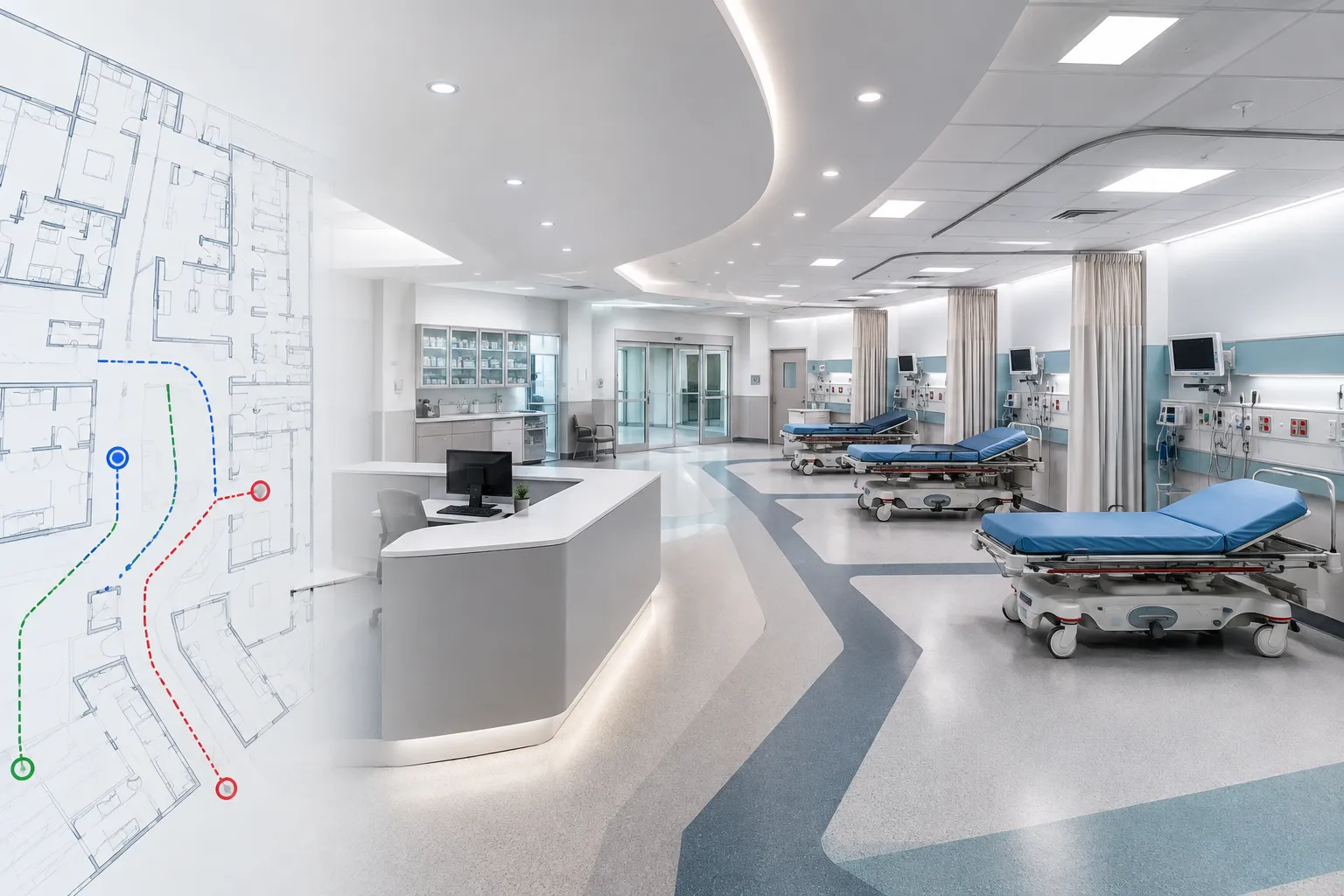
Your building layout must meet specific spatial and functional standards. Getting the layout right from the very start is critical — a poorly designed floor plan is one of the most expensive mistakes you can make. If you are in the early stages of planning your floor plan, reviewing expert guidance on hospital planning and designing will save you both time and money. These include:
- Waiting and Reception Area: Minimum 4 x 3 metres in size, with seating, a reception table, a registration table, medical records storage, a wheelchair or patient trolley, adequate ventilation, a weighing scale, and a stadiometer for measuring height.
- Consulting Rooms: At least 4 x 3 metres each, equipped with an examination couch, wash basin, thermometer, good lighting, stethoscope, diagnostic set, sphygmomanometer, table, and chairs.
- Treatment Rooms: At least 2 x 3 metres with an instruments cabinet.
- If your hospital includes specialized units such as a laboratory, maternity ward, eye clinic, dental clinic, psychiatric unit, pharmacy, or diagnostic imaging (X-ray, MRI, CT scan, ultrasound), each unit must meet its own additional HeFRA requirements.
Minimum Equipment Requirements
HeFRA requires hospitals to maintain specific emergency and clinical equipment at all times, including:
- An emergency tray stocked with needles, syringes, scalp vein needles, IV giving sets, injection hydrocortisone, injection adrenaline, 5% dextrose, normal saline, injection aminophylline, and gloves
- A suture kit containing needles, nylon, analgesics, iodine, and gauze
- Resuscitative equipment including an ambubag, oxygen trolley, suction machine (automated or pedal-operated), and drip stand
- An autoclave for sterilization
- Adequate anesthetic equipment if surgical services are offered
- For facilities with a blood bank: a blood bank fridge, transfusion records book, and blood donor cards
Let’s Build Your Dream Hospital
Whether you’re planning a new hospital, expanding an existing facility, or upgrading your healthcare technology, Actiss Healthcare is here to guide you every step of the way. Let us help you turn your vision into reality. Contact us today for a free consultation & learn more about our services and how we can support your next healthcare project.

Business Registration: Setting Up the Legal Entity
Before you even apply for a HeFRA license, you need to register your business with the Registrar General's Department (RGD) of Ghana. Private hospitals in Ghana typically register as a limited liability company, though a sole proprietorship or partnership is also allowed depending on your ownership structure.
You will need to choose a business name, prepare your incorporation documents, and obtain a Tax Identification Number (TIN) from the Ghana Revenue Authority (GRA). Without a valid TIN, you cannot complete most official processes, including NHIS accreditation.
NHIS Accreditation: Should You Bother?
Registering your private hospital with the National Health Insurance Authority opens your doors to NHIS-covered patients. Given that over two-thirds of Ghana's population holds some form of health insurance, skipping NHIS accreditation means shutting out a large segment of the market.
That said, the NHIA operates its own credentialing and audit process for private facilities. You will need to demonstrate that your facility meets the service standards required under the NHIS benefit package. The NHIA works alongside HeFRA in assessing quality, so running a properly licensed, well-staffed facility is your best preparation for NHIS accreditation as well.
Choosing Your Location: Urban vs. Rural Considerations
Location directly affects your patient volume, operating costs, and competitive position. This decision deserves serious analysis, not just a gut feeling. You can read a detailed breakdown of how to approach this in this hospital site selection guide, which covers the key factors that drive smart location decisions. Ghana's healthcare access is heavily skewed toward urban centers. Most hospitals, clinics, and pharmacies are concentrated in cities like Accra, Kumasi, Tamale, and Takoradi. Rural areas often have no modern healthcare at all, which presents both an opportunity and a challenge.
Urban Location Pros & Cons
| Factor | Urban | Rural |
|---|---|---|
| Patient Volume | High | Low to moderate |
| Competition | Intense | Low |
| Land Cost | High | Low |
| Staff Availability | Easier to recruit | Harder to attract specialists |
| Infrastructure | Better utilities, roads | Unreliable power and water |
| Government Support | Standard | Possible incentives for underserved areas |
For most new investors, urban and peri-urban areas with growing residential populations offer the best balance of patient demand and infrastructure reliability.
Financial Planning for Your Private Hospital
Starting a hospital is capital-intensive. Your financial plan needs to account for construction or renovation costs, medical equipment, staff salaries, licensing fees, insurance, working capital, and contingency funds. Many first-time hospital investors underestimate costs in critical areas — this guide on how to avoid common hospital budget mistakes is a practical read before you lock in your numbers.
Key Cost Categories to Budget For
- Land and Building: Whether you buy or rent, this is usually your biggest upfront cost. For a mid-size hospital in Accra or Kumasi, expect significant investment here.
- Medical Equipment: The major players supplying equipment in Ghana include GE Healthcare, Mindray, Philips, Canon, Johnson & Johnson, Medtronic, and Becton Dickinson (BD). Competitive pricing and local representation mean you have options.
- Staff Salaries: With minimum requirements of 2 doctors, 8 nurses, and multiple specialists, your payroll is a significant recurring cost from day one.
- Licensing and Regulatory Fees: Budget for HeFRA registration, professional council renewals, and NHIS accreditation costs.
- Pharmaceuticals and Consumables: Ghana imports approximately 85% of its total healthcare consumption, including most pharmaceuticals and medical devices. Build strong supplier relationships early.
- Generator and Backup Power: Reliable power is non-negotiable in a hospital. Budget for a generator capable of running critical systems.
Staffing Strategy: Getting the Right People
Your staff are your hospital. Meeting HeFRA's minimum numbers is just the starting point. Think carefully about how you recruit, retain, and develop your team in a market where qualified health professionals are in short supply.
Ghana has approximately 4,300 doctors and 68,000 nurses nationwide. That sounds like a lot until you realize they serve a population of around 33 million and are concentrated in urban areas. Research shows that staffing shortages remain a critical constraint, with only about 68% of required health workforce positions filled across the sector. This means you will likely face competition for qualified staff, especially experienced specialists.
Consider offering competitive salaries, professional development opportunities, and clear career pathways to attract and keep top talent. Some private hospital owners also bring in diaspora doctors from the Ghanaian community abroad, which is a legal and increasingly common practice.
Public-Private Partnerships (PPP): An Emerging Opportunity in 2026
Ghana's government has made Public-Private Partnerships a stated priority for 2026. Plans include establishing diagnostic and treatment centers across major hospitals through PPP arrangements. If your hospital has specialist diagnostic capabilities, MRI, CT scanning, laboratory services, or oncology, exploring a PPP model could accelerate your growth and provide a reliable patient referral stream from public facilities.
The Ministry of Health coordinates PPP opportunities, so engaging them early in your planning process is a smart move.
Step-by-Step Summary: How to Start a Private Hospital in Ghana in 2026
- Conduct a market feasibility study and choose your location
- Register your business entity with the Registrar General's Department
- Obtain your Tax Identification Number (TIN) from the Ghana Revenue Authority
- Secure appropriate land or premises and ensure they meet HeFRA space requirements
- Hire and confirm all required staff, ensuring each professional is in good standing with their respective council
- Procure the mandatory minimum equipment and set up your pharmacy
- Submit your HeFRA registration application with all required documents and fees
- Pass the HeFRA physical inspection
- Receive your HeFRA operating license
- Apply for NHIS accreditation if you intend to serve insured patients
- Open your hospital and begin operations
Conclusion
Starting a private hospital in Ghana in 2026 is a serious but genuinely rewarding venture. The country's healthcare demand continues to outstrip what the public sector alone can supply, and private facilities are filling that gap in a meaningful way. However, success depends on doing things right from the start. That means getting your HeFRA license, meeting every personnel and equipment requirement, building a sound financial foundation, and recruiting quality staff. The regulatory process may seem detailed, but it exists to protect patients and set a high standard for care. If you plan carefully, follow the requirements laid out by HeFRA and the relevant professional councils, and invest in the right location and team, your private hospital can become a trusted institution in Ghana's growing healthcare system. And if you want expert hands-on guidance at any stage of the process, working with a specialist hospital project management consultancy can make a significant difference in how smoothly your project moves from planning to opening day.
Frequently Asked Questions (FAQs)
1. Can a foreigner own or invest in a private hospital in Ghana?
Yes, foreign nationals can invest in Ghana's healthcare sector, including owning or co-owning a private hospital. However, the business must be registered in Ghana under the Companies Act and comply with the Ghana Investment Promotion Centre (GIPC) Act, which may specify minimum capital requirements for foreign-owned enterprises. Medical professionals working in the facility must be registered with the relevant Ghanaian professional councils.
2. How long does the HeFRA licensing process take?
The timeline varies depending on the completeness of your application and how quickly your facility can be inspected. In general, you should plan for several weeks to a few months between submission and receiving your license. Incomplete applications or facilities that fail inspection will extend this timeline. Contacting HeFRA directly at (233) 302900995 for current processing times is advisable.
3. Do I need separate licenses for a pharmacy and laboratory inside my hospital?
Yes. While your hospital operates under a general HeFRA license, specialized units within the hospital, including the pharmacy, laboratory, radiology unit, dental clinic, and maternity ward, each have their own specific HeFRA requirements and may need separate authorization or inspection. Check the requirements for each unit on HeFRA's site. before you begin setup.
4. Is NHIS accreditation mandatory for private hospitals in Ghana?
NHIS accreditation is not strictly mandatory, but it is highly recommended. Without it, your hospital cannot bill the National Health Insurance Scheme, which means NHIS card-holding patients would have to pay out of pocket or go elsewhere. Given that a large portion of Ghana's population is insured under NHIS, skipping accreditation significantly limits your patient base and revenue potential.
5. What happens if I operate a private hospital in Ghana without a HeFRA license?
Operating a health facility in Ghana without a valid HeFRA license is a violation of the Health Institutions and Facilities Act, 2011 (Act 829). It is illegal and can result in the facility being shut down, fines, and possible legal action against the owner or practitioner in charge. HeFRA is clear that operations cannot begin before the license is formally granted, regardless of how far along your preparations are.