
Healthcare Infrastructure in Sub-Saharan Africa: Opportunities & Gaps
If you want to understand one of the most pressing public health challenges in the world right now, look no further than Sub-Saharan Africa. The region carries more than 24% of the global disease burden but operates with just 3% of the world's healthcare workforce. In 2026, we're still watching a continent where millions of people walk for hours to reach a clinic that might not have clean running water, reliable electricity, or even a doctor on duty. That reality is both alarming and, in many ways, avoidable.
This article breaks down the real state of healthcare infrastructure in Sub-Saharan Africa right now: what the gaps look like, where the genuine opportunities are, and why 2026 is actually a pivotal year for the region's health future.
The Baseline: Where Does Sub-Saharan Africa Stand in 2026?
Let's start with the numbers, because they tell a story that is hard to ignore. According to the World Health Organization, Sub-Saharan Africa has only 1.3 hospital beds per 1,000 people, compared to 2.1 in Latin America and 6.1 in Europe. The region also averages just 3 physicians per 10,000 people, while OECD countries have roughly 10 times that number.
Government health spending in the region averages around 1.9% of GDP, far below the 5% target recommended by the United Nations Economic Commission for Africa. In practical terms, public health spending per person in some of the lowest-income African countries sits at just $22 to $24 per year. The minimum required for basic universal health coverage is $70 per person annually. That gap alone tells you everything you need to know about why healthcare delivery is so fragile across much of the region.
A Snapshot of Key Healthcare Infrastructure Indicators
| Indicator | Sub-Saharan Africa | Latin America | Europe |
|---|---|---|---|
| Hospital beds per 1,000 people | 1.3 | 2.1 | 6.1 |
| Physicians per 10,000 people | ~3 | ~20 | ~35+ |
| Govt health spending (% of GDP) | 1.9% | 4.1% | 6%+ |
| PHC facilities with reliable electricity | ~50% | ~85% | ~99% |
| Out-of-pocket health expenditure | ~40% | ~30% | ~15% |
These figures come from the African Development Bank's Strategy for Quality Health Infrastructure (2022-2030) and WHO data. They paint a picture that is consistent with what clinicians and public health workers on the ground report every single day.
The Critical Gaps You Need to Know About
1. Physical Infrastructure Is Still Severely Underfunded
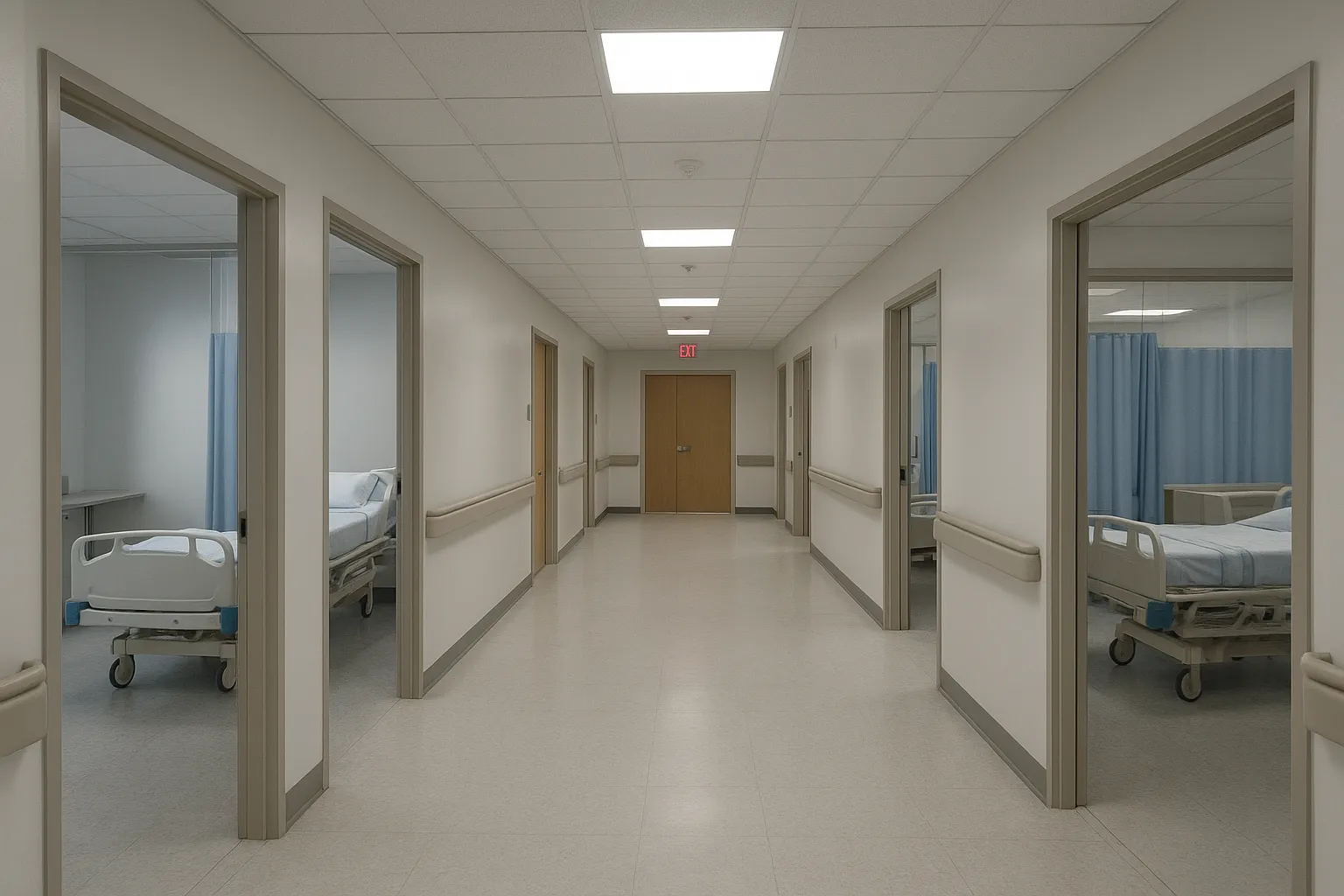
Walk into many primary health care (PHC) facilities across rural Sub-Saharan Africa in 2026 and you'll find buildings that barely function as proper medical facilities. Research conducted across Sub-Saharan Africa found that over 40% of PHC facilities lack clean water, and roughly 15% of all health facilities have no electricity at all, while about 50% lack electricity that is consistent and reliable enough to depend on. Another study spanning 18 countries found that only 74% of facilities had basics like soap, running water, or alcohol-based hand sanitizer, meaning only 17% could genuinely ensure basic infection prevention protocols.
African governments currently spend around $4.5 billion per year on health infrastructure capital expenditure. Sounds like a lot until you realize the estimated need is $26 billion annually to meet evolving health needs over the next decade. That financing gap is not shrinking fast enough. Before any new facility is built, a thorough hospital feasibility study is one of the most important steps any government or private investor can take to make sure capital actually lands where it creates the most impact.
2. The Healthcare Workforce Crisis Is Getting Worse Before It Gets Better
The human resources problem is perhaps the most acute. Sub-Saharan Africa has just 1.3 health workers per 1,000 people, well below the WHO's minimum threshold of 4.5. Out of 57 countries globally that the WHO classifies as having critically low healthcare workforce numbers, 36 of them are in Sub-Saharan Africa.
Brain drain makes this worse. In Nigeria alone, reports indicate that 63% of newly trained doctors end up practicing abroad. A study estimated that the financial losses from physician emigration across just nine Sub-Saharan African countries equaled $2.17 billion. Brookings projects a shortage of 4.3 million doctors across Africa by 2035 if current trends continue.
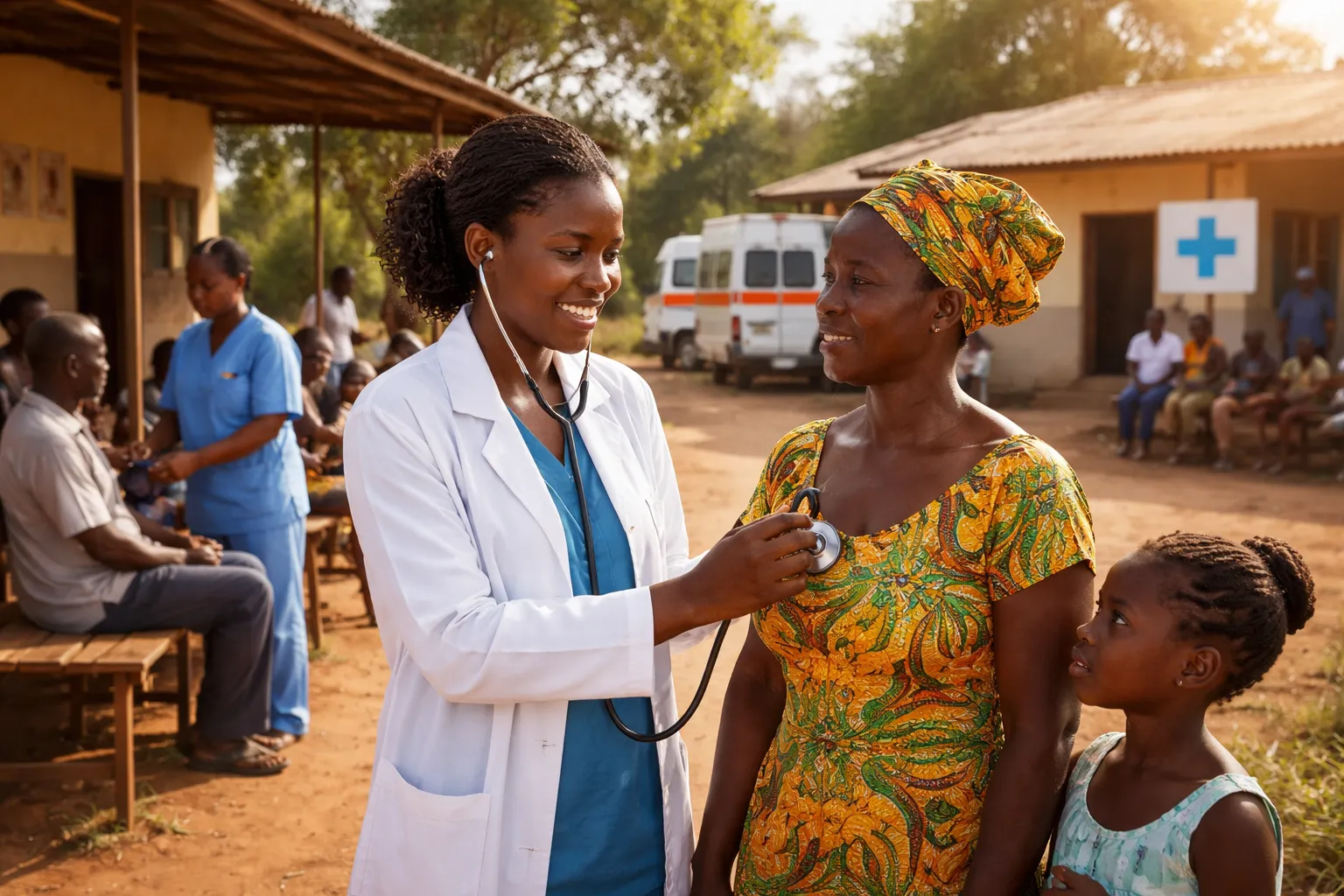
What makes this a structural problem is the urban-rural divide. The majority of the healthcare workforce concentrates in major cities. Rural areas, where over 60% of the continent's population actually lives, often have access to only about 25% of a country's doctors and nurses.
3. Disease Burden vs. System Capacity: A Dangerous Mismatch
Sub-Saharan Africa accounts for an extraordinary share of global disease. Consider just a few data points:
- Out of 39 million people living with HIV/AIDS worldwide in 2022, an estimated 25.6 million were in Sub-Saharan Africa.
- The region accounts for 60.3% of all AIDS-related deaths globally.
- Sub-Saharan Africa carries 25% of the global tuberculosis burden.
- Every year, approximately 70% of global maternal deaths occur in Sub-Saharan Africa, with roughly 178,000 mothers and 1 million newborns dying from mostly preventable causes.
At the same time, non-communicable diseases (NCDs) like diabetes, hypertension, and cancer are rising sharply and are projected to overtake infectious diseases as leading causes of mortality in coming decades. The health system is already stretched thin fighting the old battles while a new wave of chronic illness is building.
4. Financing Gaps and Out-of-Pocket Costs
Around 40% of total health expenditure in Sub-Saharan Africa comes directly out of patients' pockets. This creates what health economists call catastrophic health spending, where families are pushed into poverty by medical bills. While countries like Rwanda, Ghana, Kenya, Nigeria, Tanzania, and Ethiopia have started rolling out social health insurance schemes, the majority of the poor population remains unprotected. Many insurance programs actively exclude the poorest households, which means the people with the highest disease burden carry the most severe financial cost.
A new and serious concern for 2026 is the closure of USAID in July 2025. For decades, USAID was one of the largest sources of funding for HIV/AIDS programs, maternal and child health, and health system strengthening across the continent. Its dissolution has left a significant funding gap that partner governments, NGOs, and health programs are still trying to fill.
The Real Opportunities Emerging in 2026
1. Digital Health Is Moving From Pilot to Scale
The most exciting shift happening right now in Sub-Saharan African healthcare is the move from small-scale digital health pilots to actual, integrated systems. There are 747 million mobile connections in Sub-Saharan Africa, representing about 75% of the population. Mobile internet penetration sits at 44% as of recent figures. This makes the region genuinely well-positioned for mobile health (mHealth) and telemedicine solutions.
Countries like Rwanda have deployed telemedicine platforms like Babyl that provide remote consultations, reducing pressure on physical health facilities. Kenya has shown strong mHealth integration, particularly in maternal health and HIV care. Ethiopia's DHIS2 (District Health Information System 2) is improving national health data collection and performance monitoring. Zimbabwe's Impilo electronic health record system has streamlined clinical workflows and improved information sharing at the point of care.
Digital tools, when implemented properly, can boost healthcare system efficiency by up to 15%, according to McKinsey analysis, with those savings being reinvested directly back into the system. Understanding how IoT, AI, and automation shape modern hospital design is increasingly critical for any health facility being planned or built in the region today.
2. Public-Private Partnerships Are Picking Up Speed
Governments across Sub-Saharan Africa are warming up to public-private partnerships (PPPs) as a way to close infrastructure and service delivery gaps. Private healthcare is growing fast, particularly as incomes rise in urban areas. The private sector brings capital, speed, and operational know-how that public health ministries often lack on their own.
The key challenge for PPPs is making sure they serve rural and low-income populations, not just profitable urban markets. Structuring these agreements properly, with clear public benefit mandates, is what separates effective partnerships from ones that simply extract profit while the poorest communities remain unserved. Getting hospital planning and design right from the very beginning is a key part of making sure any new facility, whether publicly or privately funded, actually works for the people it's meant to serve.
3. Local Vaccine and Drug Manufacturing
One of the biggest lessons from the COVID-19 pandemic was how vulnerable Sub-Saharan Africa was to global supply chain disruptions in medicines and vaccines. In 2026, there is genuine momentum toward building local manufacturing capacity. Several African governments are investing in local pharmaceutical production, and the African Union's Agenda 2063 health goals specifically call for the continent to produce at least 60% of its own vaccines by 2040.
Local manufacturing reduces dependence on imports, builds technical skills, and makes supply chains more stable during global crises. It's one of the smartest long-term investments the region can make.
4. Philanthropic and International Investment Is Still Growing
Despite the USAID shock, new capital is entering the space. In June 2025, the Bill & Melinda Gates Foundation announced a commitment of approximately $200 billion over 20 years, with a large portion earmarked for African health innovation, including AI-enabled health services, youth-led innovation, and digital health infrastructure. This represents one of the largest single philanthropic pledges to continental development in modern history and signals long-term confidence in the region's health potential.
Opportunities vs. Gaps: A Side-by-Side Comparison
| Area | Current Gap | Emerging Opportunity |
|---|---|---|
| Health workforce | 1.3 workers per 1,000 people; heavy brain drain | IoT-powered remote training; telehealth task-sharing |
| Physical infrastructure | 40%+ PHC facilities lack clean water | PPP-funded facility upgrades; solar energy integration |
| Health financing | 40% out-of-pocket spending; USAID gap | Social health insurance expansion; Gates Foundation funding |
| Digital health | Poor interoperability; fragmented systems | Integrated EHRs; mHealth scale-up; DHIS2 national rollouts |
| Medicine supply | Import dependency; supply chain fragility | Local pharmaceutical manufacturing growth |
| NCDs management | System focused on infectious disease only | Patient support programs; AI diagnostic tools |
What Needs to Happen Right Now
Structural Changes, Not Just More Aid
Aid can fill gaps in the short term, but Sub-Saharan Africa's health infrastructure challenge is a structural one. It requires long-term domestic investment, reliable government health spending, and healthcare systems that are built around the actual needs of local communities rather than donor priorities. Too often, fragmented, donor-driven projects have created a patchwork of 700+ digital tools that don't talk to each other, don't scale, and disappear when the funding cycle ends.
Fixing the Electricity and Water Problem First
You cannot run a functional health clinic without consistent power and clean water. Full stop. Solar energy solutions are becoming increasingly affordable and are already being deployed in rural health facilities across the continent. Choosing the right sustainable building materials for healthcare infrastructure is also becoming a bigger part of the conversation, helping facilities cut long-term energy costs while meeting stricter environmental standards. Prioritizing energy and water access in every facility upgrade plan is not optional; it's the foundation everything else builds on.
Keeping Healthcare Workers in the Region
Countries need serious retention strategies: competitive pay, professional development pathways, rural incentives, and proper working conditions. Training more health workers only to watch them emigrate is an expensive cycle that does nothing to address local coverage gaps. The WHO's workforce threshold of 4.5 health workers per 1,000 people is a clear, achievable target that should anchor national health workforce plans.
Getting Digital Health Integration Right
Digital health in Sub-Saharan Africa suffers from a common problem: systems that work in isolation but don't connect. Interoperability between health information systems is the challenge that must be cracked if digital tools are going to improve outcomes at a population level. Research from Ethiopia and Ghana highlights how even well-functioning systems can create data duplication problems when they lack the ability to share information with each other. Working with experienced healthcare technology consultants who understand both the clinical requirements and the technical architecture can make the difference between a digital system that transforms care delivery and one that simply adds a new layer of paperwork.
Conclusion
The healthcare infrastructure situation in Sub-Saharan Africa in 2026 is a story with two parts. The first part is a serious, deeply entrenched crisis: underfunded facilities, a workforce stretched beyond its limits, out-of-pocket costs pushing families into poverty, and a disease burden that outpaces system capacity every single day. The second part is a genuine story of momentum, particularly in digital health, local manufacturing, social health insurance, and international investment. The gap between where the region is and where it needs to be is still wide, but the direction of travel, when the right policies and money are in place, is toward something better. The goal is not charity. The goal is building healthcare systems in Sub-Saharan Africa that are financially sustainable, locally owned, and strong enough to serve every person regardless of whether they live in Lagos or a remote village in South Sudan. That goal is achievable. It just requires the will to build it right.
Let’s Build Your Dream Hospital
Whether you’re planning a new hospital, expanding an existing facility, or upgrading your healthcare technology, Actiss Healthcare is here to guide you every step of the way. Let us help you turn your vision into reality. Contact us today for a free consultation & learn more about our services and how we can support your next healthcare project.

Frequently Asked Questions
1. What is the biggest challenge facing healthcare infrastructure in Sub-Saharan Africa in 2026?
The most pressing challenge is the healthcare workforce shortage. Sub-Saharan Africa has only 1.3 health workers per 1,000 people, well below the WHO's minimum threshold of 4.5. This shortage is made worse by brain drain, rural-urban imbalances, and a chronic lack of investment in training and retention programs. Without enough qualified health workers, even improved physical infrastructure cannot deliver the care people need.
2. How is digital health changing healthcare delivery in Sub-Saharan Africa?
Digital health tools like mHealth applications, telemedicine platforms, and electronic health record systems are making a real difference, especially in reaching rural communities that lack physical access to clinics. Countries like Rwanda, Kenya, and Ethiopia have deployed digital solutions that improve patient tracking, remote consultations, disease surveillance, and maternal health services. With 747 million mobile connections in the region, the mobile infrastructure already exists to scale these tools further.
3. Why do so many healthcare facilities in Sub-Saharan Africa lack basic utilities like water and electricity?
This comes down to decades of underinvestment in both health infrastructure and national utility systems. Many PHC facilities were built in remote areas where extending the national grid was not economically viable. Government health capital spending currently sits at around $4.5 billion per year, far below the $26 billion annually that is needed. Without consistent electricity and clean water, even skilled health workers cannot safely deliver care, perform surgeries, or maintain vaccines at the right temperature.
4. What role do public-private partnerships play in improving healthcare in the region?
Public-private partnerships (PPPs) are becoming a key mechanism for building new facilities, introducing technology, and improving service delivery across Sub-Saharan Africa. They bring private sector capital and operational expertise into healthcare, helping governments move faster than they could with public funding alone. The critical condition is that these partnerships must be structured to serve low-income and rural populations, not just profitable urban markets, otherwise they risk widening the health equity gap rather than closing it.
5. What impact did the closure of USAID in 2025 have on healthcare in Sub-Saharan Africa?
The dissolution of USAID in July 2025 removed one of the largest and most consistent sources of funding for HIV/AIDS programs, maternal and child health, and health system strengthening across the continent. Many ongoing projects faced delays, downsizing, or cancellation. Governments, NGOs, and health programs that depended on USAID funding are still working through the impact. New funding commitments, such as the Gates Foundation's $200 billion pledge announced in June 2025, offer some relief, but the scale of the gap left by USAID will take years to fully address.