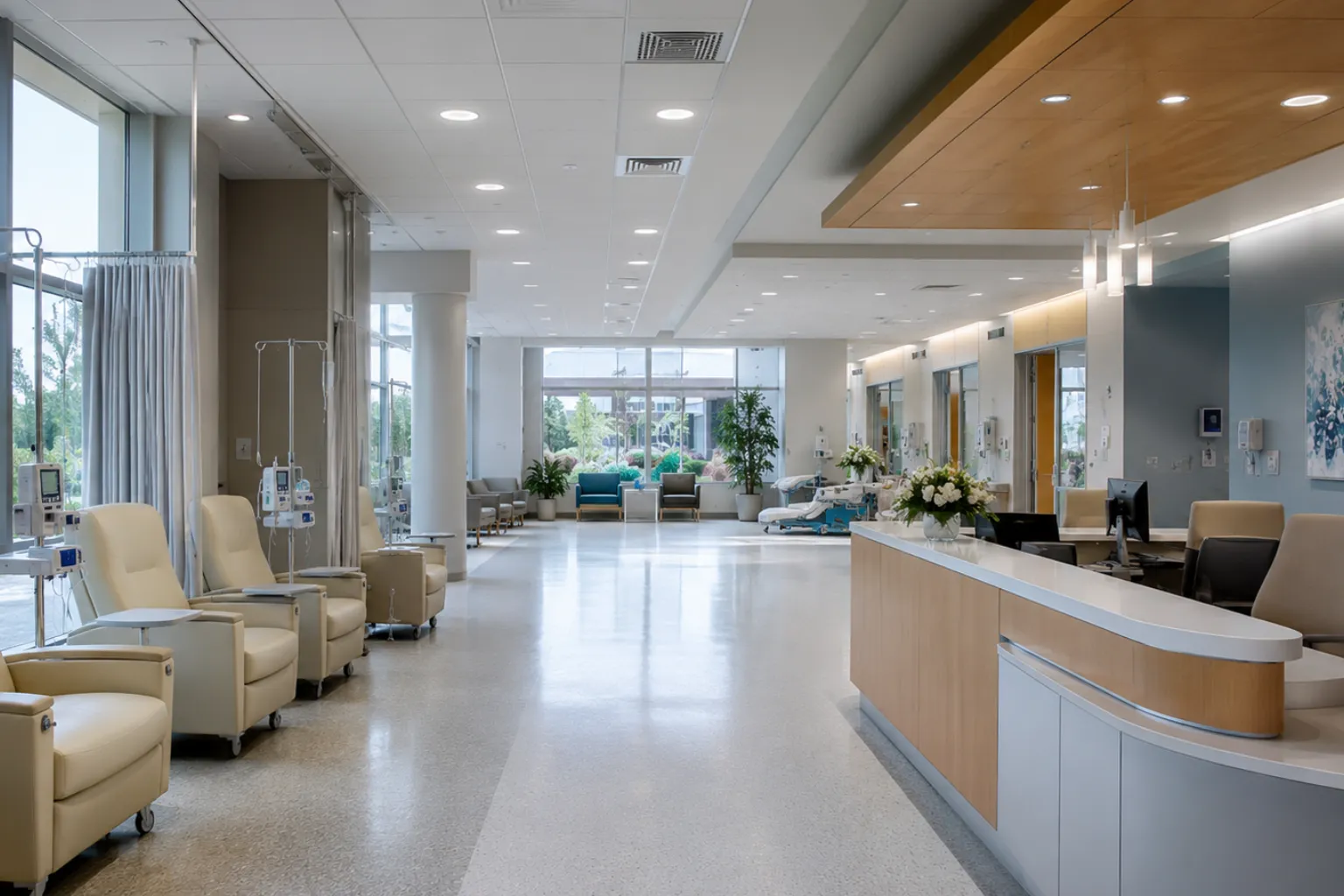

Patient Flow Optimisation: How Good Design Reduces Hospital Wait Times
Have you ever sat in a hospital waiting room wondering why it seems like nobody has any idea where you are, what you need, or when someone will see you? You're not alone. Long wait times are one of the most common complaints patients have about hospitals worldwide, and they're not just frustrating - they can be genuinely dangerous. The good news is that a lot of this comes down to something fixable: how a hospital is designed and how patient movement is managed from the moment someone walks through the door to the moment they go home.
Patient flow optimisation is the process of making sure patients move through every stage of their care - admission, treatment, and discharge - as smoothly and quickly as possible. And while you might think this is purely a staffing or scheduling issue, the physical design of a hospital plays a much bigger role than most people realise. This article breaks down exactly how good design directly cuts wait times, and what hospitals around the world are doing about it.
What Is Patient Flow and Why Does It Matter?
Patient flow describes the movement of patients through the different stages of required hospital care. It considers whether patients are subject to unnecessary delay at any point in this process. When the system works well, patients get the right care at the right time. When it doesn't, the consequences go well beyond inconvenience.
According to peer-reviewed research published on PubMed Central, a delayed patient can experience an increased length of stay of 2.6 days and increased costs, while mortality can rise significantly for patients who experience care delays compared to those who do not. These are not small numbers. Every bottleneck in the hospital system has a real human cost.
Poorly managed patient flow can lead to overcrowded emergency rooms, delayed treatments, and an increased risk of errors - all of which can compromise patient safety and reduce hospital efficiency. On the flip side, getting this right brings real rewards. Research shows that reducing patient wait times by just 10% can lead to a tangible increase in patient satisfaction and reduced hospital overcrowding.
How Hospital Design Directly Impacts Patient Flow
Most people think of hospital design as purely about aesthetics or infection control. But the layout of a facility - where departments sit in relation to each other, how corridors flow, where nurses are stationed, how much space is allocated to triage - has a profound effect on how quickly and safely patients can move through the system. If you're planning or refining a facility, understanding the principles behind hospital planning and designing is one of the best starting points.
The Layout Problem
Outdated hospital layouts substantially increase overall execution costs while lowering operational efficiency. Long travel distances, long waiting times, overcrowding, and difficulties in wayfinding during clinic visits are highly correlated with, and often caused by, space and layout deficiencies.
A poorly designed layout can lead to unnecessary long delays, staff fatigue, and patient dissatisfaction. Think of it like a badly organised kitchen. If everything is scattered around in inconvenient places, cooking becomes chaotic. Hospitals work the same way. A strategically optimised hospital layout ensures easy access to supplies, logically arranged departments, and even strategically placed hand sanitising stations. These strategies can reduce staff walking distances by up to 20%, meaning more time for patient care.
A study showed that hospitals designed with straight-line layouts reduced transfer times between departments by 15%. That's a significant gain just from rethinking how rooms are arranged. For a detailed look at how internal movement affects care quality, the guide on hospital circulation planning for doctors, patients, and supplies is worth reading carefully. When departments that regularly interact with each other are placed close together, the time patients spend being transferred between them drops considerably.
Triage and Emergency Department Design
Emergency departments are where layout issues hit hardest. When a patient walks into an ED, the path they take from registration to triage to treatment needs to be as short and clear as possible. Poorly designed EDs force patients into long corridors, create confusion at reception, and produce waiting room pile-ups that slow everything down. Many of these issues are avoidable - and they're covered in detail in this breakdown of the 13 most common hospital design mistakes doctors regret.
One forward-thinking approach is vertical treatment. In vertical treatment, patients typically stay in their clothing and do not change into gowns. Patients who stay in conventional exam rooms will often take longer to leave as they need to change. As a result of patients going through vertical treatment, the time it takes for new patients to receive treatment is reduced.
The incorporation of vertical treatment after the triage area means patients do not need to go as far for treatment, reducing the time it takes to receive care. Vertical treatment has a positive impact on physical space requirements, operational processes, and patient psychology and satisfaction.
By creating separate treatment spaces for non-urgent patients and higher acuity patients, the design works to increase efficiency and productivity, allowing hospital staff to more easily meet the urgent demands for treatment of patients in critical condition.
Wayfinding and Spatial Clarity
One underappreciated aspect of hospital design is wayfinding - how easily patients and visitors can find their way around. When someone is sick, stressed, or in pain, a confusing hospital layout causes real harm. If a patient crosses a perpendicular hallway between reception and the waiting room, they may become mistaken and head off in the wrong direction, creating confusion and a potential delay in care.
Clear signage, logical department sequencing, and well-placed staff stations all reduce confusion. Hospitals that invest in this kind of spatial clarity see shorter times from patient arrival to first contact with clinical staff. These principles sit at the heart of patient-centred hospital design, which places the patient's physical and emotional experience at the core of every layout decision.
Key Patient Flow Design Strategies and Their Impact
| Design Strategy | Problem It Solves | Measured Impact |
|---|---|---|
| Straight-line department layout | Long inter-department transfer times | 15% reduction in transfer times |
| Optimised outpatient clinic layout | Excessive patient waiting and cycle times | 36% reduction in wait time; 14% reduction in cycle time |
| Vertical treatment zones in ED | Bed occupancy by low-acuity patients | Freed beds for critical patients; faster discharge |
| Centralised bed management | Uncoordinated admissions and transfers | Average stay reduced from 11.5 to 4.4 days |
| Staff station proximity to patient areas | Staff walking distance and response time | Up to 20% reduction in staff travel distance |
| Optimised supply room placement | Surgery prep delays | Reduced procedure start delays |
Technology as a Design Extension
Good physical design is only part of the picture. The way technology is built into a hospital's design can either support or undercut everything the layout is trying to achieve. For a broader look at how digital tools are being woven into modern hospital infrastructure, the article on smart hospitals, IoT, AI, and automation in healthcare design covers this topic thoroughly.
Real-Time Location Systems (RTLS)
RTLS monitors patient movement in real-time, predicts potential bottlenecks, and helps staff efficiently allocate resources. St. Clair Health, a 329-bed acute-care medical centre, implemented RTLS and experienced a significant reduction in patient wait times in both pre-op and post-op areas.
Implementing real-time tracking systems can decrease emergency department wait times by at least 30%. When staff can see exactly where every patient is and how long they've been waiting at each stage, they can act before small delays turn into serious bottlenecks.
Predictive Analytics and Demand Forecasting
The aim of demand and capacity management is to predict patient demand by time of day, day of the week, and season of the year, and to design hospital operations with sufficient capacity to meet that demand. When hospitals know when their busy periods will be, they can staff up in advance and prepare more beds rather than scrambling reactively.
Facilities using predictive analytics can improve appointment adherence rates by 25%. Reliable software solutions that use machine learning can anticipate peak times and allocate resources accordingly.
Electronic Health Records and Digital Dashboards
Health Information Systems, including real-time dashboards and push-notification systems, have proven effective in decreasing patient wait times and reducing staff workload. Dashboards allow hospital administrators to monitor key performance indicators, identify delays, and respond rapidly to systemic bottlenecks.
When a nurse, doctor, and bed manager can all see the same patient status on a shared dashboard, handoffs become faster and safer. Communication errors that add hours to a patient's stay get caught before they happen.
Let’s Build Your Dream Hospital
Whether you’re planning a new hospital, expanding an existing facility, or upgrading your healthcare technology, Actiss Healthcare is here to guide you every step of the way. Let us help you turn your vision into reality. Contact us today for a free consultation & learn more about our services and how we can support your next healthcare project.

Process Design: Lean Methodology in Hospitals
Physical structure and technology still need the right processes behind them. This is where Lean methodology has proven its value in healthcare settings. According to the Institute for Healthcare Improvement, mapping patient flows and identifying non-value-added time helps hospitals learn about and minimise time wastage, all the while improving patient satisfaction.
Lean thinking encourages hospitals to look at every step in a patient's care and ask a simple question: does this step add value to the patient, or does it just add time? Registration paperwork that duplicates information already collected. A patient waiting for a consultant who has already signed off the notes. A discharge that sits in a queue because a pharmacist is waiting on a form. These are all fixable with the right process design.
Standardised Protocols
Hospitals that have embraced standardised protocols have reported a 10% reduction in patient length of stay and a 15% increase in bed availability. When everyone knows exactly what to do at each stage, decisions get made faster and fewer things slip through the cracks.
Fast-Track Services for Low-Acuity Patients
Fast-track services are designed to help treat patients with less severe conditions as quickly as possible. By routing lower-acuity patients away from the main ED flow, hospitals free up space and staff for more serious cases. This is essentially a design decision: you're splitting the patient population into streams and giving each stream its own path through the facility.
Discharge Planning: The Step Everyone Forgets
One of the biggest causes of bottlenecks in patient flow is actually at the end of the process, not the beginning. When discharges are delayed, beds stay occupied, incoming patients wait longer, and the whole system backs up.
Several hospitals already consider it important to estimate the day of discharge upon patient admission and, if possible, have the entire organisation focus on reaching that goal. Statistical feedback loops are required to ensure precise estimations and enable root cause analyses behind potential deviations.
Effective discharge planning has been associated with a 25% reduction in readmission rates. Implementing standardised discharge instructions ensures that patients understand their follow-up care, contributing to better health outcomes. Delayed discharges account for over 20% of bed occupancy in many hospitals, which is a significant drag on the entire patient flow system.
Bed Management: The Central Coordinator
Poor patient flow is especially apparent when incoming emergency department patients cannot be immediately admitted into the hospital due to a lack of available beds. When supply cannot match demand, patients experience lower quality of care and worse health outcomes.
One structural fix that has proven highly effective is a centralised bed management function. Creating a central bed management authority - where all hospital admissions and transfers fall under one coordinating umbrella - makes it possible to monitor hospital beds and provide empty beds for both elective and emergency admissions, matching demand with available capacity. Tracking the right hospital project KPIs and metrics is what makes this kind of oversight actionable rather than theoretical.
The results can be striking. Structured patient flow interventions have been shown to reduce average hospital length of stay from 11.5 to 4.4 days and decrease emergency department boarding time by 90%, with significant improvements in bed turnover and financial savings.
Poor Design vs. Good Design: A Direct Comparison
What a Poorly Designed Hospital Looks Like
- Departments are spread far apart, requiring long patient transfers
- Triage and waiting areas feed into the same corridors as clinical zones, creating congestion
- No separation between low-acuity and high-acuity patient paths
- Supply rooms are poorly positioned relative to surgical suites
- Nurses spend excessive time walking rather than caring for patients
- No real-time data on patient location or wait stage
What a Well-Designed Hospital Looks Like
- Frequently interacting departments are physically adjacent
- Separate patient streams for ED triage, vertical treatment, and inpatient admission
- Clear, intuitive wayfinding from entry to every department
- Staff stations placed centrally within patient care zones
- RTLS and digital dashboards give real-time visibility into patient location and status
- Discharge lounges allow beds to be freed while patients await final paperwork or transport
Scheduling and Capacity: Smoothing Out the Peaks
Hospitals can improve predictability across operations by level-loading operating rooms with designated blocks per clinic, putting caps on the number of surgeries. This solution helps achieve greater balance over the week and across services. When surgical volume is distributed evenly, post-operative wards don't get overwhelmed on Wednesdays while sitting empty on Fridays.
Online appointment systems are another design tool that helps with this. Allowing patients to schedule visits at their convenience reduces the workload on administrative staff and helps hospitals plan resources more effectively. This system also allows hospitals to manage patient flow by distributing appointments daily, reducing overcrowding risk.
The Financial Case for Good Patient Flow Design
Beyond patient outcomes, there's a compelling financial argument for investing in patient flow design. On average, hospitals lose approximately $1.5 million annually due to inefficiencies in their processes. When you factor in longer stays, repeated testing due to communication errors, readmissions from poor discharge planning, and overtime for staff managing chaotic workflows, the costs stack up fast.
One case management and patient flow programme in Saudi Arabia resulted in net cost savings of over 32 million US dollars after implementing structured patient flow improvements. That's not an outlier. Hospitals that invest in thoughtful design and patient flow processes consistently see a return, both in finances and in patient outcomes. If you're still in the early planning stages, commissioning a hospital feasibility study is one of the most effective ways to model these gains before a single brick is laid.
Conclusion
Patient flow optimisation isn't just a buzzword used in healthcare management circles. It's a practical, evidence-backed approach to making hospitals work better for everyone who uses them. The physical layout of a facility, the placement of departments, the design of triage areas, the integration of real-time tracking, and the structure of discharge planning all feed directly into how long a patient waits and how safe their care is. Good design is not about making a hospital look nice; it's about making sure every square meter, every corridor, and every workflow decision serves the patient's journey from arrival to discharge as efficiently as possible. When hospitals get this right, wait times fall, staff burnout decreases, patient satisfaction improves, and lives are genuinely saved.
Frequently Asked Questions (FAQs)
1. What is patient flow optimisation in a hospital?
Patient flow optimisation is the process of managing and improving how patients move through every stage of their hospital care - from admission and triage through treatment and discharge. The goal is to reduce unnecessary delays, improve care quality, and make the best use of available hospital resources like beds, staff, and equipment.
2. How does hospital layout affect patient wait times?
A hospital's physical layout determines how far patients and staff need to travel between departments, how clearly patients can navigate the building, and how efficiently different care stages can happen in sequence. Research has shown that optimising outpatient clinic layouts alone can reduce patient wait times by over 36%, and straight-line department design can cut transfer times by 15%.
3. What is vertical treatment in an emergency department?
Vertical treatment is an ED design approach where lower-acuity patients are treated in designated chairs rather than traditional beds and exam rooms. Patients stay in their own clothes, move through treatment faster, and are discharged without ever occupying a standard hospital bed. This frees beds for more seriously ill patients and significantly reduces overall ED wait times.
4. How do real-time location systems (RTLS) improve patient flow?
RTLS uses sensors and wearable tags to track the physical movement of patients, staff, and equipment within a hospital in real time. This allows administrators to spot bottlenecks as they happen, reduce idle time between care stages, and make faster decisions about bed allocation and staffing. Studies have shown that RTLS implementation can cut emergency department wait times by at least 30%.
5. Why does discharge planning matter for patient flow?
Delayed discharges are one of the biggest hidden drivers of hospital bottlenecks. When patients occupy beds waiting for discharge paperwork, pharmacy sign-off, or transport, those beds are unavailable for incoming patients. Studies show that delayed discharges account for over 20% of bed occupancy, and effective discharge planning - including setting an expected discharge date at the time of admission - can reduce both length of stay and readmission rates significantly.