
What Are the Golden Rules for Designing Hospital Interiors?
Walk into a hospital and you can feel it within seconds. Some buildings feel calm and easy to move through. Others feel like a maze that makes your stress worse before you even see a doctor. That difference isn't an accident. It comes down to how well the hospital interior design was planned from day one.
If you're an architect, a healthcare administrator, or just someone curious about why some hospitals feel so much better than others, this guide breaks down the real rules that shape good hospital interiors. No fluff, no guesswork, just the practical principles that healthcare designers and researchers actually rely on. If you're planning a project yourself, a proper hospital planning and designing process from the start makes all the difference.
Why Hospital Interior Design Matters More Than You Think
A hospital isn't a hotel or an office building. People walking through its doors are often scared, in pain, or exhausted. Some are visiting a sick relative. Some are staff who spend twelve hours on their feet. Every single one of these people is affected by the space around them, whether they realize it or not.
Healthcare design researcher Roger Ulrich's well-known studies on patient recovery, published through institutions like the Center for Health Design, showed that elements like natural light and views of nature can reduce patient stress and even shorten recovery time. That single idea changed how hospitals are built around the world. Good design isn't just about looking nice. It plays a direct role in healing, safety, and how staff perform their jobs.
The Core Golden Rules of Hospital Interior Design
1. Put Wayfinding First
Getting lost in a hospital is more than annoying. It's stressful, and in emergencies, it can be dangerous. Clear signage, color-coded zones, and logical layouts help patients and visitors find their way without asking five people for directions.
- Use consistent color schemes for different departments
- Keep signage at eye level and easy to read from a distance
- Avoid long, confusing corridors with no visual landmarks
- Place information desks at every major entry point
A modern hospital interior should feel intuitive. If someone needs a map app just to find radiology, the layout has failed. Smart hospital circulation planning ties directly into this, since the way people, staff, and supplies move through a building shapes how easy it is to navigate.
2. Bring in Natural Light Wherever Possible
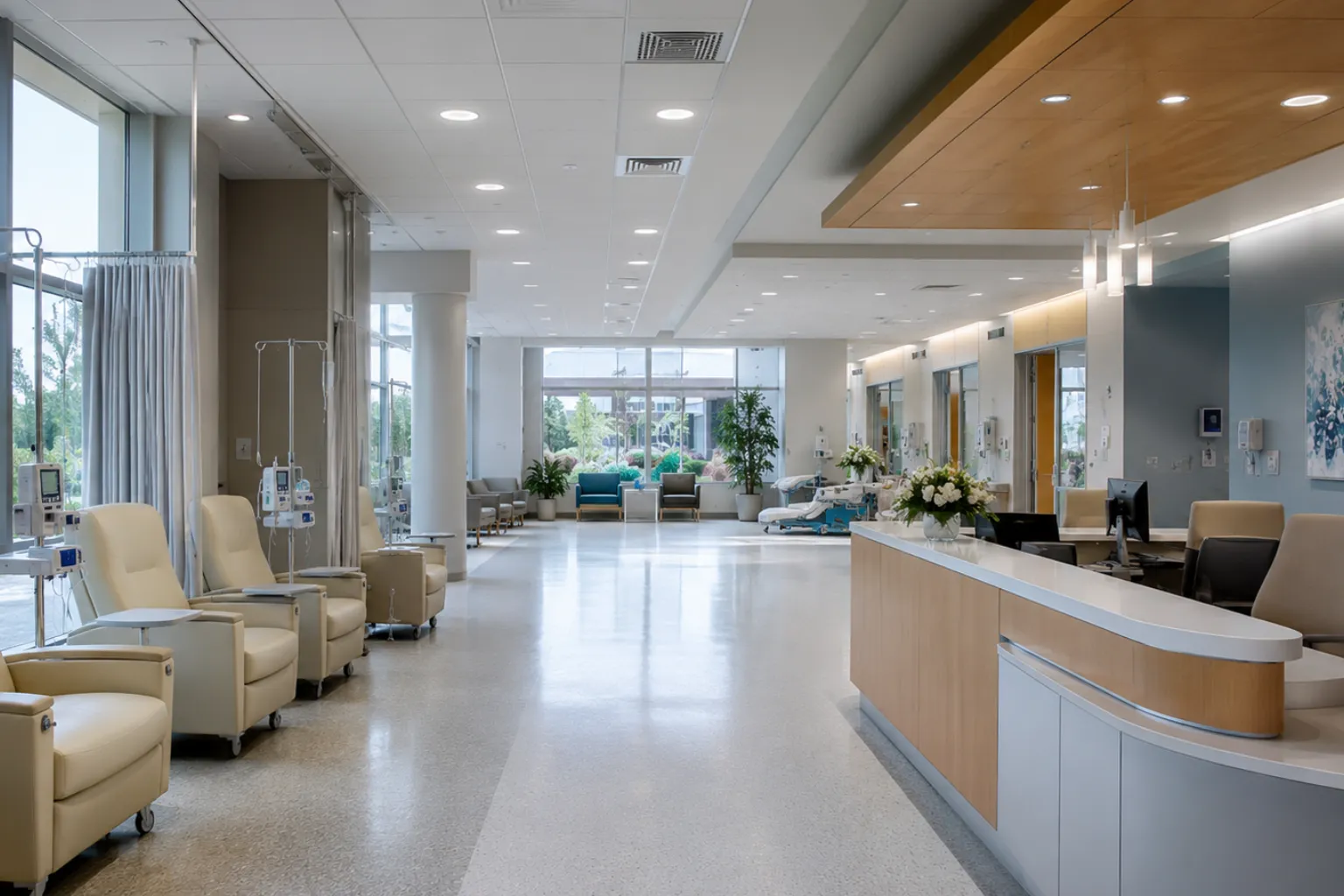
This one keeps coming up in healthcare interior design research, and for good reason. Natural light affects mood, sleep cycles, and even pain perception. Patient rooms with windows and daylight access tend to support better outcomes compared to rooms that rely only on artificial lighting.
Designers now plan hospital interiors around courtyards, large windows, and skylights wherever the building's structure allows it. Waiting rooms, in particular, benefit from daylight since people often sit there for long stretches feeling anxious.
3. Design for Infection Control
Surfaces, materials, and layouts all play a role in keeping infections from spreading. This rule became even more obvious to the public after recent global health events, but it's been a core part of hospital interiors for decades. Guidance from bodies like the World Health Organization continues to shape infection control standards used in hospital design today.
| Design Element | Infection Control Purpose |
|---|---|
| Non-porous flooring | Prevents bacteria buildup and allows easy cleaning |
| Antimicrobial surfaces | Reduces germ transfer on high-touch areas |
| Hand sanitizer stations | Placed at every entry and exit point |
| Separate clean and dirty utility rooms | Stops cross-contamination between supplies |
Materials matter here. Seamless flooring, rounded corners, and washable wall panels are common features in modern hospital interior design because they limit places where germs can hide. Choosing the right materials early also ties into broader sustainable building materials decisions for healthcare infrastructure.
4. Prioritize Patient Privacy and Dignity
Nobody wants their medical conversation overheard by a stranger in the next bed. Privacy isn't a luxury in healthcare spaces, it's a basic need. This means thinking carefully about room layouts, soundproofing, and even how curtains and partitions are placed.
Single-patient rooms have become more common in newer hospital builds for this exact reason. They reduce noise, lower infection risk, and give patients a sense of control over their own space, which matters a lot during a stressful hospital stay. This focus on the patient experience is really at the heart of patient-centered hospital design principles.
5. Make Staff Workflow a Priority
Doctors and nurses move constantly throughout their shifts. A poorly designed layout forces them to walk far longer distances than necessary, which wastes time and increases fatigue. Good hospital interior design places supply rooms, nurse stations, and patient rooms in a way that minimizes unnecessary movement.
Some hospitals now use what's called a "racetrack" layout, where nurse stations sit at the center of a circular unit with patient rooms around the outside. This setup cuts down walking time and keeps staff closer to patients who might need quick attention.
6. Use Calming Colors and Materials
Bright white walls and harsh fluorescent lighting used to be the standard. Not anymore. Soft, muted tones like pale blues, greens, and warm neutrals are now favored in hospital interiors because they create a calmer atmosphere without feeling cold or clinical.
Color also helps with wayfinding when used thoughtfully, such as assigning a specific color to each floor or department. This combination of calm and clarity is part of what separates a modern hospital interior from an older, more institutional-feeling one.
7. Incorporate Nature and Biophilic Design
Biophilic design means bringing natural elements indoors, think plants, water features, natural textures, and views of greenery. Research on hospital recovery has repeatedly pointed to nature exposure as a factor in reducing patient anxiety and even pain medication use.
Healing gardens, indoor plant walls, and rooms positioned to overlook outdoor greenery are becoming standard requests in healthcare interior design projects, especially in pediatric and long-term care facilities where patients spend extended time indoors. This approach also shows up in specialized fields, like how healing environments improve cancer care outcomes for long-stay oncology patients.
8. Plan for Flexibility and Future Needs
Healthcare needs change fast. A hospital built today needs to handle new equipment, changing patient volumes, and evolving treatment methods without a full renovation every few years. This is why flexible room designs, modular walls, and adaptable furniture layouts matter so much in current hospital interior design practices.
Rooms that can switch between single and double occupancy, or units that can be converted for different specialties, give hospitals room to grow without massive construction costs down the line. It's a core idea behind designing for growth so a hospital doesn't outgrow itself within a few years of opening.
9. Reduce Noise Wherever Possible
Hospitals are loud. Beeping monitors, rolling carts, overhead announcements, it adds up fast and affects both patients and staff. Sound-absorbing ceiling tiles, carpeted areas where hygiene allows, and quieter alert systems all help bring noise levels down.
Some hospitals have switched to silent paging systems for staff instead of overhead speakers, cutting down on one of the most common patient complaints in satisfaction surveys.
10. Design Waiting Areas That Don't Feel Like Waiting Areas
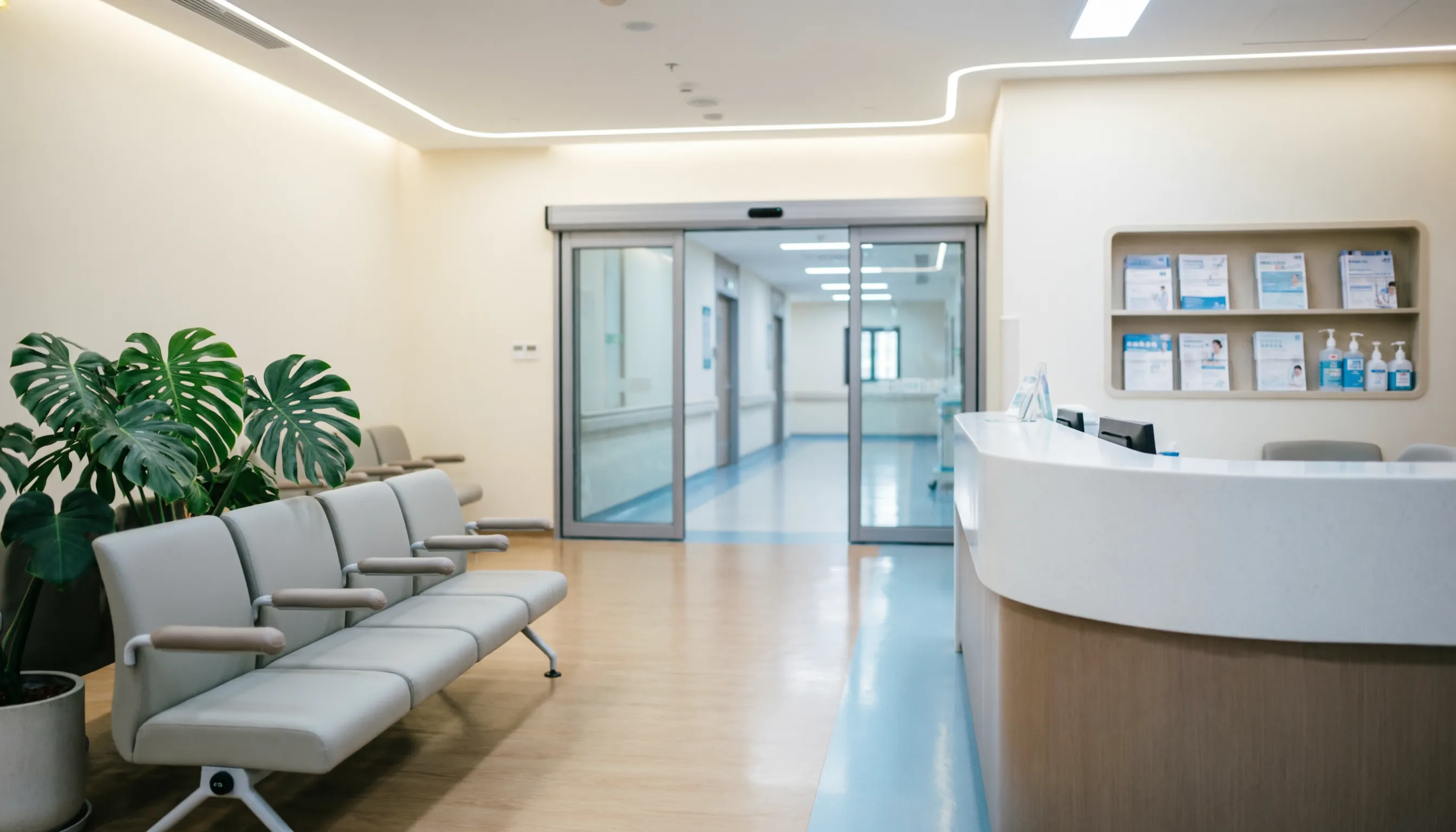
Nobody enjoys sitting in a waiting room, but good design can make the experience less miserable. Comfortable seating, natural light, charging stations, and even small touches like fish tanks or art displays can shift the mood of a space that's usually associated with anxiety.
Separate waiting zones for different departments also help, so a parent waiting for pediatric care isn't sitting next to someone waiting for an oncology appointment. Good layouts here also support better patient flow optimisation to reduce wait times across the entire facility.
Comparing Traditional vs Modern Hospital Interior Design
| Feature | Traditional Hospital Design | Modern Hospital Interior Design |
|---|---|---|
| Lighting | Fluorescent, minimal daylight | Maximized natural light, daylight-mimicking fixtures |
| Layout | Long corridors, centralized desks | Decentralized nurse stations, shorter travel paths |
| Colors | Plain white or pale institutional tones | Calming, varied palettes tied to wayfinding |
| Patient Rooms | Shared rooms, limited privacy | Single-occupancy rooms with privacy controls |
| Nature Integration | Rare or absent | Healing gardens, greenery, natural views |
Common Mistakes in Hospital Interiors That Should Be Avoided
- Ignoring acoustic planning until after construction is finished
- Overcrowding waiting rooms with too few seating options
- Using materials that look good but are hard to clean and disinfect
- Skipping flexible design, leading to costly renovations later
- Placing nurse stations too far from patient rooms
Many of these issues come up again and again in real projects, which is why it's worth reviewing common hospital design mistakes doctors regret before finalizing any layout.
Conclusion
Good hospital interior design isn't about chasing trends or making a building look impressive in photos. It's about creating a space where patients feel calmer, staff can work efficiently, and infection risks stay low. From natural light and wayfinding to noise control and flexible layouts, every single rule covered here exists because it directly affects real people having one of the hardest days of their lives. When healthcare interior design gets these basics right, the whole building works better for everyone inside it, patients, families, doctors, and nurses alike.
Let’s Build Your Dream Hospital
Whether you’re planning a new hospital, expanding an existing facility, or upgrading your healthcare technology, Actiss Healthcare is here to guide you every step of the way. Let us help you turn your vision into reality. Contact us today for a free consultation & learn more about our services and how we can support your next healthcare project.

Frequently Asked Questions
1. What is the most important factor in hospital interior design?
Patient safety and comfort usually top the list, but wayfinding and infection control are right behind since they affect nearly every part of the hospital experience.
2. How does natural light affect patient recovery?
Studies on hospital design have linked natural light exposure to reduced stress, better sleep patterns, and in some cases shorter recovery periods for patients.
3. Why are single-patient rooms becoming more common?
They offer better privacy, lower infection risk, and give patients more control over noise and visitors compared to shared rooms.
4. What materials work best for hospital interiors?
Non-porous, easy-to-clean materials like certain vinyl flooring and antimicrobial surfaces are preferred because they support infection control without sacrificing comfort.
5. How does hospital design affect staff performance?
Efficient layouts that reduce walking distances and centralize supplies help staff move faster and reduce fatigue, which can directly impact patient care quality.