
Biomedical Waste Management: Disposal Guidelines and Rules in India
Walk behind any hospital ward and you will find a row of coloured bins. They look simple, but they hold one of the biggest safety jobs in healthcare. Biomedical waste management protects nurses, housekeeping staff, patients, and even the people who live near a landfill. In this guide, I explain the biomedical waste disposal guidelines Indian facilities follow, break down the biomedical waste management rules in India in plain language, and show you how segregation, storage, and planning fit together in a real hospital.
What Is Biomedical Waste and Why Does It Matter?
Biomedical waste is any solid or liquid waste created while diagnosing, treating, or immunising humans or animals. It also covers waste from related research and from producing or testing biologicals. Think used syringes, blood-soaked dressings, discarded tissue, expired medicines, and lab cultures.
The 85 and 15 Split
Here is a number that surprises many people. According to the World Health Organization, about 85% of the waste produced by healthcare activities is general, non-hazardous waste, similar to household trash. The other 15% is hazardous. It may be infectious, toxic, chemical, or radioactive. When staff mix the two, the whole bin becomes a hazard, and the cost of treatment goes up for everyone.
Who Gets Hurt When Things Go Wrong
WHO notes that waste handlers face an immediate risk of needle-stick injuries and exposure to infectious or toxic material. Scavenging at dump sites adds more danger. Treatment itself can cause trouble too. Burning waste in poorly controlled incinerators can release dioxins, furans, and other toxic air pollutants. So the stakes reach well beyond the hospital gate.
Biomedical Waste Management Rules in India
India's current legal base is the Bio-Medical Waste Management Rules, 2016. The Ministry of Environment, Forest and Climate Change issued them under the Environment (Protection) Act, 1986, and they were gazetted on 28 March 2016. They replaced the older 1998 rules.
The biggest change was simplification. Earlier rules sorted waste into ten categories. The 2016 rules cut that to four colour-coded categories, which makes life easier for ward staff. The rules also spell out the duties of every healthcare facility for segregation, packaging, and transport.
What the 2018 and 2019 Amendments Added
The government tightened the rules through amendments made on 16 March 2018 and 19 February 2019. The main points include:
- A barcode system for bags and containers of biomedical waste that leave the premises, following CPCB guidance.
- GPS and barcode systems for shared treatment facilities, known as CBWTFs.
- A phase-out of chlorinated plastic bags and gloves, with a deadline of 27 March 2019.
- Clearer reporting and documentation duties for facilities and operators.
Key Duties for Hospitals and Clinics
The rules call the person in charge of a facility the "occupier." That person must make sure waste is handled without harming health or the environment. Authorisation under these rules is also part of the wider approvals a new facility needs, which we cover in our guide to the licenses required to start a hospital in India. In practice, three things are non-negotiable:
- Segregate waste at the point where it is created.
- Never mix biomedical waste with municipal waste.
- Never store untreated waste for more than 48 hours.
Where a CBWTF operates within 75 km, a facility should send its waste there instead of building its own treatment setup.
Biomedical Waste Disposal Guidelines: The Colour Code
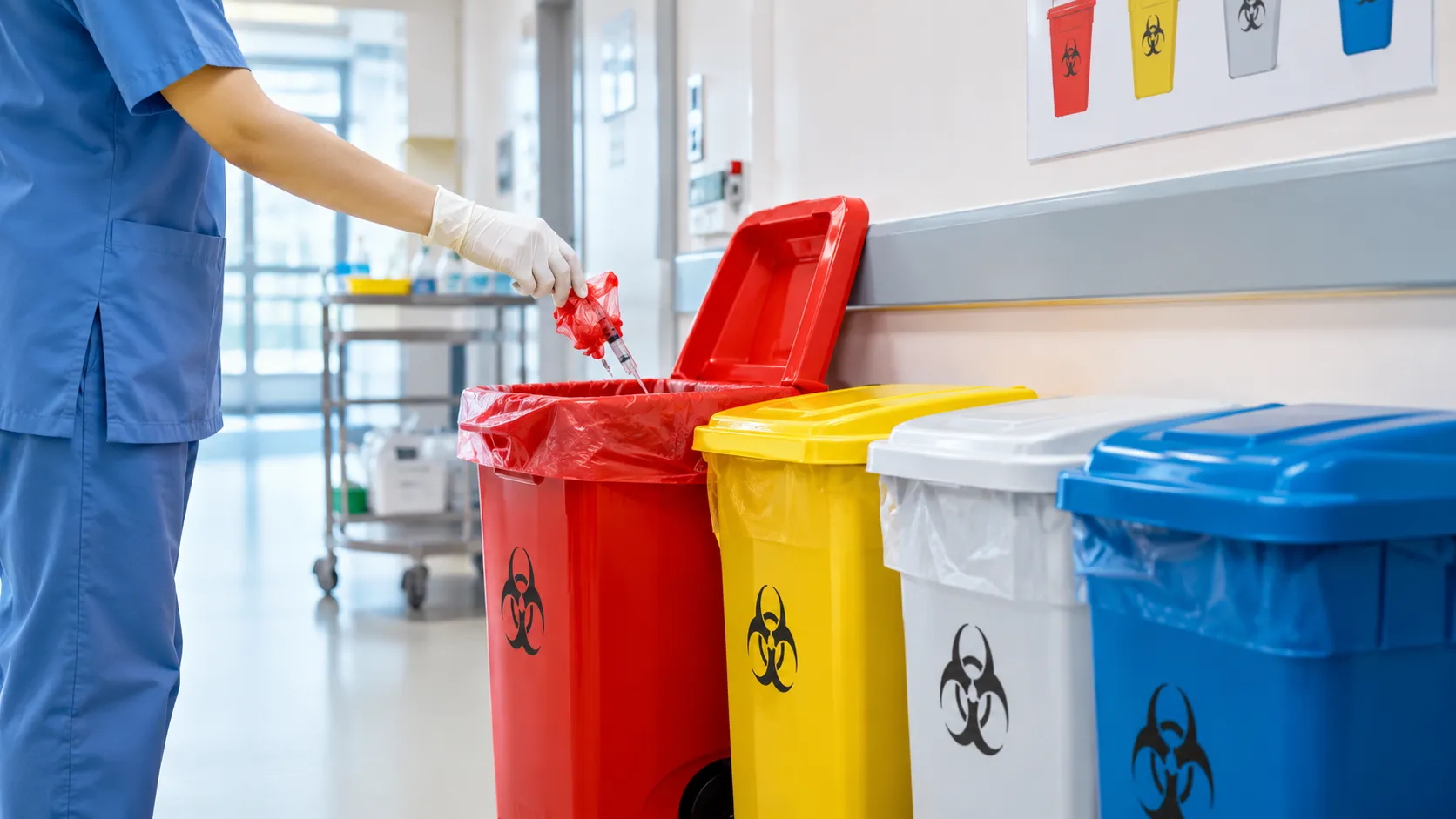
The colour code is the heart of the biomedical waste disposal guidelines. Each colour tells you what goes inside and how that waste will be treated later. Bags and containers must carry the biohazard symbol and a label with details such as date and type of waste.
| Colour and Container | What Goes Inside | Usual Treatment |
|---|---|---|
| Yellow, non-chlorinated plastic bag | Human and animal anatomical waste, soiled waste (such as dressings), expired medicines, chemical waste, microbiology lab waste | Incineration, plasma pyrolysis, or other approved methods |
| Red, non-chlorinated plastic bag | Contaminated recyclable plastic such as tubing, bottles, catheters, and gloves | Autoclaving or microwaving, then shredding and recycling |
| White, puncture-proof, leak-proof, tamper-proof container | Waste sharps, including needles and scalpels | Autoclaving or dry heat sterilisation, then shredding or mutilation |
| Blue, cardboard box or puncture-proof container | Glassware and metallic body implants | Disinfection or autoclaving, then recycling |
Always check Schedule I of the rules and the latest instructions on the Central Pollution Control Board website, since some items have special conditions.
Let’s Build Your Dream Hospital
Whether you’re planning a new hospital, expanding an existing facility, or upgrading your healthcare technology, Actiss Healthcare is here to guide you every step of the way. Let us help you turn your vision into reality. Contact us today for a free consultation & learn more about our services and how we can support your next healthcare project.

Biomedical Waste Segregation in Hospitals
Segregation is where most systems win or fail. The rules require it at the source, which means the nurse or technician who creates the waste decides where it goes. Sorting a mixed bag later is not allowed, and honestly it is unsafe anyway.
Why Source Segregation Works
When waste is sorted right away, fewer people touch infectious material. Treatment is also cheaper, because only the truly hazardous portion needs special handling. Recycling gets easier too, since clean red-bag plastics can be treated and sent on for reuse.
Simple Habits for Ward Staff
- Place the right coloured bins within arm's reach of every procedure area.
- Display colour-coding posters at each station so no one has to guess.
- Drop sharps into the white container immediately, without recapping needles.
- Fill bags only about three-quarters full before sealing them.
- Keep general waste bins, such as paper and food packaging, completely separate.
Mistakes That Land Hospitals in Trouble
The usual slip-ups are easy to spot once you know them. Staff toss gloves into yellow bags that belong in red. Glass ends up in a soft bag. General waste sneaks into biohazard bins and inflates the volume. Regular training and spot checks by the infection control team fix most of these problems. If you are preparing for accreditation, our guide on NABH accreditation requirements and hospital preparation shows how daily practices like these get reviewed.
Biomedical Waste Storage Area Design
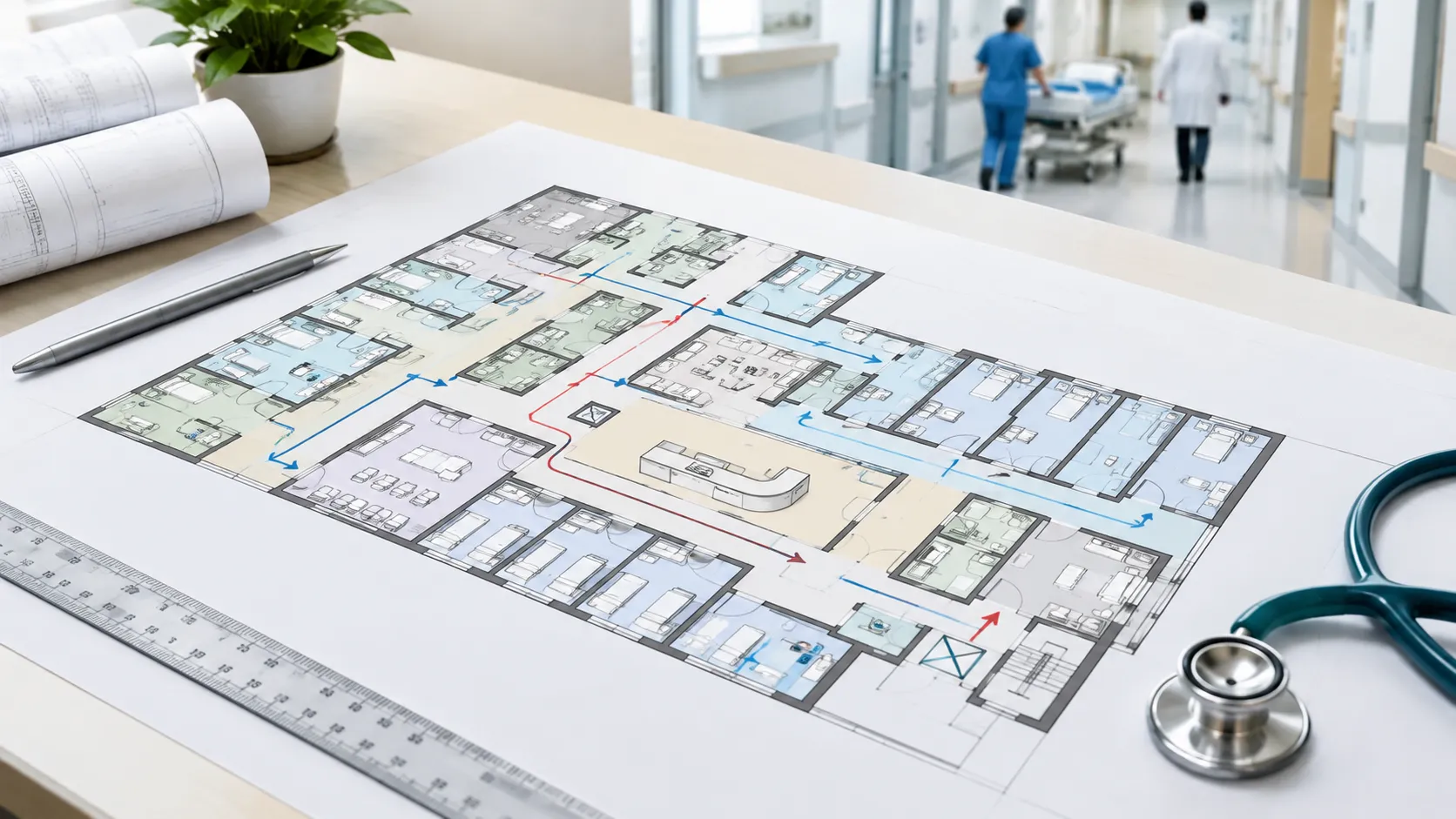
Waste does not vanish the moment a bag is sealed. It travels from the ward to a central storage room, where it waits for collection. A poorly planned storage area can undo all the careful work done at the bedside, so biomedical waste storage area design deserves real attention.
Location and Layout
CPCB-linked hospital guidance asks for a safe, ventilated, and secure location for storing segregated waste. The room should be sized to match the amount of waste the hospital produces. Place it away from patient areas, kitchens, and public movement, and make sure the collection vehicle can reach it easily. The best time to settle this is during hospital planning and designing, because moving a storage room after construction is costly.
Features a Good Storage Room Should Have
- A roof and walls that keep out rain, rodents, birds, and stray animals.
- An impervious floor with a slope so the area is easy to wash and drain.
- Proper ventilation and a safety check for fire hazards.
- A lockable door, with entry limited to authorised staff.
- Separate space or bins for each colour category.
- A nearby spot for cleaning and washing the trolleys and containers used for transport.
Signage You Need on the Door
Mark the entrance with the biohazard logo and a notice such as "Authorised Personnel Only." It is a small detail, yet it keeps visitors and untrained staff out of a risky space.
Keep the 48-hour limit in mind while you design. If your storage room regularly holds waste for longer, either your pickup schedule or your room size needs a fix.
Building a Hospital Biomedical Waste Management Plan
A hospital biomedical waste management plan turns rules into daily routine. It does not need to be fancy. It needs to be clear, written down, and followed. Here is a simple sequence to build around.
- Assign responsibility. Name a nodal officer and form a small waste committee with members from nursing, housekeeping, laboratory, and administration.
- Map your waste. Walk through each department and note what waste it produces, how much, and where.
- Set up bins and signs. Provide correct colour-coded containers with biohazard symbols at every point of generation.
- Plan internal transport. Fix routes and timings so waste moves from wards to the storage room without crossing patient areas. A clear hospital circulation plan for doctors, patients, and supplies makes this much easier.
- Arrange treatment. Tie up with an authorised CBWTF or use approved on-site treatment where the rules allow.
- Train everyone. Include new joiners, housekeeping, and outsourced staff, and provide protective gear and vaccination for handlers.
- Keep records. Log waste generation, storage, and handover, and review the plan on a schedule.
Shared Facility or On-Site Treatment?
Most facilities rely on a CBWTF, but the choice depends on location and rules. This table gives you a quick comparison.
| Factor | Shared Treatment Facility (CBWTF) | On-Site Treatment |
|---|---|---|
| When it applies | Expected where a CBWTF is available within 75 km | Allowed only where no such facility is within reach |
| Equipment burden | Handled by the operator | Hospital buys, runs, and maintains it |
| Tracking | Barcode and GPS systems required | Records kept by the hospital |
| Permissions | Operator needs authorisation under the rules | Facility needs authorisation and pollution norms compliance |
Conclusion
Good biomedical waste management comes down to a few steady habits. Sort waste at the source, follow the colour code, store it safely for no longer than 48 hours, and hand it to an authorised treatment facility with proper barcode tracking. The biomedical waste management rules in India give every hospital a clear path, and the biomedical waste disposal guidelines fill in the details. If you build a simple hospital biomedical waste management plan, train your people, and invest in a well-planned storage area, you protect staff, patients, and the environment all at once. If you are setting up a new facility and want expert help with compliance from day one, our hospital project consultancy team can guide you.
Let’s Build Your Dream Hospital
Whether you’re planning a new hospital, expanding an existing facility, or upgrading your healthcare technology, Actiss Healthcare is here to guide you every step of the way. Let us help you turn your vision into reality. Contact us today for a free consultation & learn more about our services and how we can support your next healthcare project.
Frequently Asked Questions
1. What are the biomedical waste management rules in India?
The Bio-Medical Waste Management Rules, 2016, issued under the Environment (Protection) Act, 1986, govern the topic. They replaced the 1998 rules and were amended in 2018 and 2019 to add barcoding, GPS tracking for treatment facilities, and a phase-out of chlorinated plastic bags and gloves.
2. How long can a hospital store biomedical waste?
Untreated biomedical waste must not be stored beyond 48 hours. Shorter storage is better, so plan pickups with your treatment facility accordingly.
3. What goes into the yellow bag and the red bag?
Yellow bags take anatomical waste, soiled dressings, expired medicines, chemical waste, and microbiology lab waste. Red bags take contaminated recyclable plastics such as tubing, bottles, catheters, and gloves.
4. Can hospitals mix biomedical waste with municipal waste?
No. The rules prohibit mixing, and they also prohibit sorting mixed waste downstream. Segregation must happen at the point of generation.
5. What does a biomedical waste storage area need?
It should be safe, ventilated, secure, roofed, and sized for the hospital's waste volume. It should also have a sloped, washable floor, fire safety checks, a lockable door, and biohazard signage limiting entry to authorised staff.
6. What is the barcode system for biomedical waste?
It is a tracking method in which bags and containers carry barcode labels before they leave the facility. Under the 2018 amendment, shared treatment facilities must also use GPS and barcode systems, which helps authorities trace waste from source to treatment.