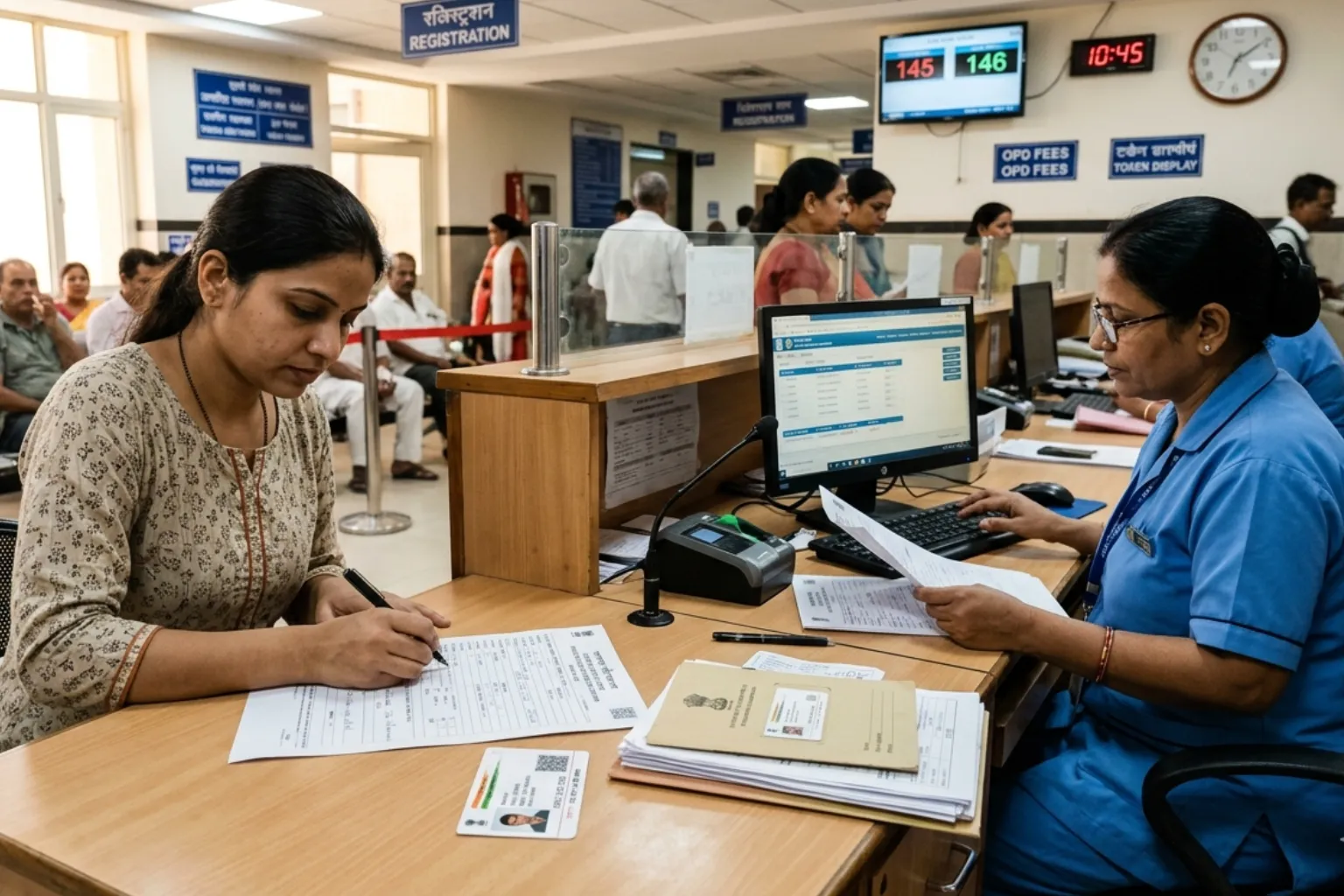

Step-by-Step Hospital Registration in India - Documents, Process and Timeline
So you've decided to open a hospital or nursing home in India. That's a big move, and honestly, a great one for the community you'll serve. If you're still in the early thinking stage, you might find it helpful to read this practical guide on how doctors can start their own hospital. But once you've made the decision, before a single patient walks through your doors, you need to deal with one crucial thing: getting your hospital legally registered. The registration process in India is not something you can skip or wing your way through. It's mandatory, it's layered, and if you don't do it right, you could face heavy fines or even a forced shutdown.
The good news? It's entirely doable once you understand how the system works. This guide breaks the whole thing down in plain language - what documents you need, which authorities to approach, how long it takes, and what it costs. Whether you're setting up a small nursing home, a multi-specialty private hospital, or a diagnostic lab, this 2026 guide has you covered.
What Is Hospital Registration in India and Why Does It Matter?
Hospital registration in India is an official authorization issued by the state health department or a relevant regulatory authority. It confirms that your healthcare facility meets the legal, medical, and infrastructural requirements to operate in the country. Without this registration certificate, your hospital cannot legally function. Running an unregistered facility can lead to monetary penalties of up to ₹50,000 on the first offence, scaling up to ₹5 lakh for repeated violations under the Clinical Establishments Act, 2010.
Getting registered isn't just about avoiding fines. A registered hospital builds patient trust, gains eligibility to participate in government healthcare schemes, and can get empanelled with insurance companies. It also puts you in the national database maintained by the Ministry of Health and Family Welfare - giving you genuine credibility in the eyes of patients and healthcare bodies alike.
The Legal Backbone: Clinical Establishments (Registration and Regulation) Act, 2010
The Clinical Establishments (Registration and Regulation) Act, 2010 is the central legislation that governs the registration of hospitals, clinics, nursing homes, diagnostic labs, and other healthcare facilities across India. It was enacted to standardize the quality of healthcare services and bring all clinical establishments under a clear regulatory framework.
The Act has been adopted by 19 States and Union Territories, including Arunachal Pradesh, Assam, Bihar, Haryana, Himachal Pradesh, Jharkhand, Mizoram, Rajasthan, Sikkim, Telangana, Uttar Pradesh, Uttarakhand, and all Union Territories except the NCT of Delhi. States that have not yet adopted this central act operate under their own state-specific healthcare establishment laws.
Key Provisions Under the Act
- All clinical establishments - public and private - must register with the designated district authority.
- Provisional registration is valid for one year and must be renewed before expiry.
- Permanent registration is granted once a facility meets all prescribed standards.
- Every registered establishment must display its registration certificate in a visible place on the premises.
- Standards are set by the National Council for Clinical Establishments, chaired by the Director General of Health Services (DGHS).
Types of Hospitals and Their Registration Categories
Before you start collecting documents, it's important to know which category your hospital falls into. The type directly determines what licenses you'll need and how long the process takes. For a detailed breakdown of every licence you might encounter, check out this complete guide to licences required to start a hospital in India.
| Hospital Type | Description | Key Licenses Required |
|---|---|---|
| Primary Care Centre / Small Clinic | Basic outpatient services, general consultations | Clinical Establishment Act Registration, Fire NOC, Biomedical Waste Cert |
| Secondary Care Hospital | Specialized care, diagnostic services, minor surgeries | All of the above + Labour Licence, Pharmacy Licence |
| Tertiary Care / Multi-Specialty Hospital | Advanced surgeries, ICUs, multi-specialty treatments | All of the above + Pollution Board NOC, Blood Bank Licence, Radiation Safety Cert |
| Diagnostic Lab / Pathology Centre | Investigations, testing, imaging services | Clinical Establishment Registration, NABL Accreditation (optional but recommended) |
Complete List of Documents Required for Hospital Registration
This is the part that trips up most first-time applicants. Missing even one document can delay your application by weeks. Here's a consolidated list of documents you'll need to prepare before you approach any authority:
Entity and Ownership Documents
- Certificate of Incorporation or Partnership Deed (depending on your business structure - Pvt. Ltd., LLP, Trust, or Sole Proprietorship)
- PAN Card of the entity
- GST Registration Certificate
- Memorandum of Association (MoA) and Articles of Association (AoA) for companies
Property and Premises Documents
- Ownership deed or valid lease agreement of the hospital premises
- Building plan approved by the local municipal authority
- Completion certificate from the municipal body
- Zoning clearance confirming the property is approved for healthcare use
Medical and Staff Credentials
- Registration certificates of all doctors from the respective State Medical Council
- Nursing staff registration certificates from the State Nursing Council
- Qualification certificates of all medical and paramedical staff
- List of all medical equipment with calibration certificates
Safety and Compliance Certificates
- Fire Safety No Objection Certificate (NOC) from the local Fire Department
- Biomedical Waste Management Authorization from the State Pollution Control Board (SPCB)
- No Objection Certificate from the Pollution Control Board (for hospitals above a certain size)
- Lift clearance certificate (if applicable)
Additional Documents for Specialized Facilities
- Pharmacy licence from the State Drug Control Authority (for in-house pharmacies)
- Blood Bank licence from the Central Drugs Standard Control Organisation (CDSCO)
- Radiation safety clearance from the Atomic Energy Regulatory Board (AERB) (for radiology and imaging departments)
- Narcotic Drug licence for hospitals administering controlled substances
Step-by-Step Hospital Registration Process in India (2026)
Now let's get into the actual process. Think of hospital registration as a series of stages - each one builds on the last. Here's how to do it, in the correct order:
Step 1: Register Your Hospital as a Legal Entity
Before anything else, your hospital must exist as a legal entity. You can register it as a Private Limited Company (under the Companies Act, 2013), a Limited Liability Partnership (LLP), a Trust, a Society, or a Sole Proprietorship. Most hospitals opt for a Pvt. Ltd. company structure. File with the Ministry of Corporate Affairs (MCA) through their online portal and obtain your Certificate of Incorporation. This also locks in your official business name.
Step 2: Finalize and Get Building Plan Approval
Your hospital premises need to be approved by the local municipal authority. Submit your architectural drawings and building plans showing room layouts, bed capacity, fire exits, accessibility features, and sanitation infrastructure. If you haven't finalised your design yet, working with a specialist in hospital planning and designing at this stage can help ensure your drawings meet healthcare building codes on the very first submission. The local authority will verify if the design meets zoning regulations before granting approval. This is often one of the more time-consuming steps, so start it early.
Step 3: Apply for the Clinical Establishment Act Registration
This is the core registration for your hospital. In states where the Clinical Establishments (Registration and Regulation) Act, 2010 is in force, you apply to the District Registering Authority - headed by the District Collector, the District Health Officer, and other prescribed members. In states not covered by the central act, you apply under the relevant state legislation (such as Maharashtra's Maharashtra Medical Establishment Act or Karnataka's Karnataka Private Medical Establishments Act).
Most states now offer an online application portal. Here's how the process flows:
- Create an account on your state's health department or Clinical Establishment portal.
- Fill in the prescribed application form with details about the hospital type, bed strength, services offered, and medical staff.
- Upload all required documents in the specified formats.
- Pay the prescribed registration fee online.
- Submit the application and note down the reference ID generated by the portal.
Once submitted, a physical inspection of your premises will be scheduled by the CDMO (Chief District Medical Officer) team. If the inspection reveals any deficiencies, you'll receive a notice via your registered email. Rectify the issues, submit proof of rectification with your original reference ID, and send the physical file to the concerned authority. After a satisfactory inspection report, the registration certificate is signed by the DGHS and mailed to you. You must display the original at a prominently visible spot in the facility.
Step 4: Obtain Fire Safety NOC
Apply to your local Fire Department for a No Objection Certificate. An inspection team will visit your hospital to verify that fire extinguishers are installed, fire exits are clearly marked and unobstructed, smoke detectors and sprinkler systems are in place, and the building layout allows safe evacuation. If you want a thorough checklist covering what inspectors actually look for, this hospital fire safety compliance guide is worth reading before you book the inspection. This certificate is mandatory before you can get clinical establishment registration in most states.
Step 5: Get Biomedical Waste Management Authorization
Every hospital generates biomedical waste - used syringes, soiled dressings, expired medicines, lab waste, and more. The Biomedical Waste Management Rules, 2016 require every healthcare facility to obtain prior authorization from the State Pollution Control Board (SPCB). You'll need to demonstrate that you have a signed agreement with an authorized Common Biomedical Waste Treatment Facility (CBWTF) for proper waste disposal, along with proper segregation protocols at the facility.
Step 6: Apply for a Pharmacy Licence (If Applicable)
If your hospital has an in-house pharmacy or dispensary, you need a pharmacy licence from the State Drug Controller. The application goes to the State Drug Control Authority and requires proof of a registered pharmacist on staff, proper storage infrastructure, and a list of drugs to be stocked. This is governed by the Drugs and Cosmetics Act, 1940.
Step 7: Get Speciality-Specific Clearances
This step is only for hospitals with specialised departments. If you have an X-ray or CT scan unit, apply for clearance from the Atomic Energy Regulatory Board (AERB). If you plan to run a blood bank, apply for a licence from the Central Drugs Standard Control Organisation (CDSCO). For hospitals with operation theatres or ICUs, you may need additional certifications depending on your state rules. These clearances run in parallel with your main registration - don't wait until the end to start them.
Step 8: Labour and Employment Registrations
Hospitals are large employers, which means you also have compliance obligations under labour law. You'll need to register under the Employees' Provident Fund (EPF) Act if you have 20 or more employees, the Employees' State Insurance (ESI) Act for applicable staff, the Shops and Commercial Establishments Act of your state, and the Contract Labour Act if you employ contract workers.
Step 9: ROHINI Registration for Insurance Empanelment
If you want your hospital to be recognized by health insurance companies, registering on ROHINI (Registry of Hospitals in Network of Insurance) maintained by the Insurance Information Bureau of India (IIB) is essential. IRDAI guidelines set specific eligibility criteria - including minimum bed strength and infrastructure requirements - for hospitals to be listed. This registration is what enables cashless insurance claims for your patients.
Let’s Build Your Dream Hospital
Whether you’re planning a new hospital, expanding an existing facility, or upgrading your healthcare technology, Actiss Healthcare is here to guide you every step of the way. Let us help you turn your vision into reality. Contact us today for a free consultation & learn more about our services and how we can support your next healthcare project.

Hospital Registration: Timeline Overview
One of the most common questions is: how long does all this take? The honest answer is that timelines vary significantly by state and facility type. Here's a realistic breakdown:
| Registration / Licence | Authority | Approximate Timeline |
|---|---|---|
| Company/Entity Registration | Ministry of Corporate Affairs (MCA) | 7-15 working days |
| Building Plan Approval | Local Municipal Authority | 30-90 days |
| Clinical Establishment Act Registration (Provisional) | District Registering Authority | 30-90 days (post inspection) |
| Fire Safety NOC | Local Fire Department | 15-30 days |
| Biomedical Waste Authorization | State Pollution Control Board | 30-60 days |
| Pharmacy Licence | State Drug Control Authority | 30-45 days |
| AERB Clearance (Radiology) | Atomic Energy Regulatory Board | 60-120 days |
| Blood Bank Licence | CDSCO | 60-90 days |
| ROHINI Registration | Insurance Information Bureau | 30-60 days |
In total, expect the complete process to take anywhere from 3 to 9 months for a standard hospital. Multi-specialty hospitals with several speciality clearances needed can take up to 12 months or more. Starting early and running multiple applications in parallel is the best strategy.
Optional but High-Value: NABH and ISO Certifications
While not mandatory for basic operation, NABH (National Accreditation Board for Hospitals and Healthcare Providers) accreditation is widely recognized as the quality gold standard for hospitals in India. It boosts patient trust, improves internal processes, and makes insurance empanelment significantly easier. If you're planning to pursue it, this step-by-step NABH accreditation guide for new hospitals walks you through everything you need to prepare. NABL accreditation serves a similar role for diagnostic labs and pathology centres, confirming that your testing processes meet international standards.
ISO certifications like ISO 9001 (Quality Management) and ISO 27001 (Information Security) are also popular among hospitals that want to signal operational maturity, especially those working with corporate clients or international patients.
Penalties for Non-Compliance
India's healthcare laws take violations seriously. Under the Clinical Establishments Act, 2010, the penalty structure is progressive:
- Running an unregistered establishment: Fine up to ₹10,000 for the first offence
- Second offence: Fine up to ₹50,000
- Subsequent offences: Fine up to ₹5,00,000
- Knowingly working in an unregistered establishment: Fine up to ₹25,000
- Obstructing an investigation or furnishing false information: Fine up to ₹5,00,000
Beyond financial penalties, your facility can be sealed or shut down by the registering authority. That's a risk simply not worth taking.
Can a Non-Doctor Open a Hospital in India?
Yes, absolutely. A non-medical entrepreneur or investor can legally own and set up a hospital in India. For a more detailed look at the legal rights and restrictions involved, read our article on who can legally open a hospital in India. The law does not require the owner to hold a medical degree. However, all clinical operations must be managed and supervised by qualified doctors who are registered with the respective State Medical Council. So while you may own the hospital, you must hire licensed professionals to handle all medical services and patient care.
State-Specific Regulations to Keep in Mind
India's healthcare regulatory setup is a mix of central and state-level rules. Here's a quick comparison to understand the variations:
| State / UT | Governing Law | Regulatory Authority |
|---|---|---|
| Uttar Pradesh, Bihar, Haryana, Rajasthan (and other adopting states) | Clinical Establishments Act, 2010 | District Registering Authority |
| Maharashtra | Maharashtra Medical Establishments Act | State Health Department / Local Body |
| Delhi | Delhi Nursing Homes Registration Act, 1953 | DGHS Delhi / Nursing Home Cell |
| Karnataka | Karnataka Private Medical Establishments Act | State Health Department |
| Tamil Nadu | Tamil Nadu Private Clinical Establishments Act | DCHS / District Health Officer |
Always verify the specific rules applicable in your state before beginning the application process. Consulting a healthcare compliance consultant or legal advisor with knowledge of local regulations can save a lot of back-and-forth with authorities.
Renewal of Hospital Registration
Provisional registration under the Clinical Establishments Act is valid for one year. The renewal application must be filed at least 30 days before the expiry date. If you file after the expiry, a late renewal fee (as prescribed by the state) will apply. For permanent registration - granted once a hospital fully meets all notified standards - the renewal cycle is longer and varies by state. Keep a calendar reminder well ahead of your renewal deadline; missing it can interrupt your legal right to operate.
Conclusion
Hospital registration in India in 2026 is a structured, multi-stage process that demands planning, documentation, and patience. From registering your entity to getting your Clinical Establishment certificate, fire safety NOC, biomedical waste authorization, and speciality-specific clearances - each step matters and each one builds toward your final goal of opening a fully legal, compliant healthcare facility. The whole process can take anywhere from 3 to 12 months depending on your hospital type and location, so starting early is the smartest thing you can do. Follow the checklist, stay in touch with the relevant authorities, and don't be afraid to work with a specialist - our hospital project consultancy team can guide you through the more complex clearances and make sure nothing slips through the cracks. Getting it right the first time is always faster than fixing it later.
Frequently Asked Questions (FAQs)
1. How long does it take to get a hospital registration certificate in India?
It generally takes 30 to 90 days to receive the core Clinical Establishment registration certificate after submitting a complete application and clearing the physical inspection. However, when you factor in all other mandatory licenses - fire NOC, biomedical waste authorization, pharmacy licence, and speciality clearances - the total process can take 3 to 9 months for most hospitals, and up to 12 months for large multi-specialty facilities.
2. Is the Clinical Establishments Act, 2010 applicable across all states in India?
No, it is not applicable across all states. As of 2026, the Act has been adopted by 19 States and Union Territories, including Uttar Pradesh, Bihar, Haryana, Rajasthan, and all Union Territories except the NCT of Delhi. States like Maharashtra, Karnataka, Tamil Nadu, and Delhi operate under their own state-specific healthcare establishment legislation.
3. Can a hospital in India operate without a registration certificate?
No. Operating without registration is illegal under both the Clinical Establishments Act, 2010 and equivalent state laws. Penalties start at ₹10,000 for the first offence and can go up to ₹5,00,000 for repeated violations. The establishment can also be sealed or shut down by the registering authority. Getting registered before opening your facility is non-negotiable.
4. Is NABH accreditation mandatory for hospital registration in India?
No, NABH accreditation is not a mandatory legal requirement to operate a hospital in India. It is an optional quality certification that signals high standards of care and patient safety. However, many insurance companies prefer or require NABH-accredited hospitals for cashless empanelment. Many government health schemes also give preference to NABH-accredited hospitals when listing empanelled facilities.
5. What happens if I make structural changes to my hospital after registration?
Any significant structural changes, service expansions, or ownership transfers require you to amend your existing registration. You'll need to inform the registering authority, submit updated building plans or ownership documents, and potentially undergo a fresh inspection. Operating with unregistered structural changes can be treated as a compliance violation and may attract penalties similar to those for operating without registration.