
Green Hospital: A Way Ahead For A Smart Hospital
Walk into most hospitals and you'll notice the same thing: bright fluorescent lights, humming machines, and a lot of energy being burned around the clock. Hospitals never really switch off. They run 24/7, use huge amounts of water and electricity, and produce a surprising amount of waste every single day. That's exactly why the idea of a green hospital has become such a big talking point in healthcare circles today. It's not just a trend or a marketing label. It's a real shift in how hospitals are designed, built, and run, and it's shaping what a smart hospital of the future looks like.
In this article, I'll break down what a green hospital actually means, why it matters so much right now, what features make a hospital "green," and how this concept connects to the bigger picture of smart, sustainable healthcare. I'll keep things simple and practical so you walk away with a clear picture, not just buzzwords. If you're planning a new facility from the ground up, this is exactly the kind of thinking that should shape your hospital planning and design process from day one.
What Exactly Is A Green Hospital?
A green hospital is a healthcare facility built and operated with the environment in mind, right alongside patient care. It's a place that recycles materials, cuts down on waste, saves energy and water, and gives people cleaner air to breathe, both inside and outside the building. Researchers describe it as a facility that fulfills at least one of several conditions, such as choosing an environmentally friendly site, using nature-friendly building materials, staying sensitive to the environment during construction, and carrying that same sensitivity into daily hospital operations.
Put simply, a green hospital doesn't just treat sick people. It actively tries to keep healthy people from getting sick in the first place by reducing pollution, waste, and resource strain on the surrounding community. The goal isn't to turn healthy people into patients through poor environmental practices. Instead, it flips the equation: care for the planet becomes part of caring for the patient.
Why This Concept Emerged
Healthcare as an industry is one of the biggest resource users out there. Hospitals consume more energy and water per square foot than most other commercial buildings of similar size. In fact, healthcare facilities in the United States use more than 315 gallons of water per bed every single day, and an average hospital burns through roughly 103,600 Btu of natural gas per square foot each year. Lighting, water heating, and space heating alone account for more than 65% of total energy use in a typical healthcare center.
That level of consumption comes at a cost. The more energy a hospital burns, the more toxic waste gets released into the environment, and that pollution circles right back to affect human health. It's a strange loop where the very institutions meant to heal people end up contributing to the conditions that make people sick. This realization is what pushed hospital administrators, architects, and policymakers to rethink how healthcare buildings should function, and it's also why more owners are running a proper energy audit for their hospitals before deciding where to cut costs and consumption.
How Green Hospitals Connect To Climate Change
Climate change isn't a distant issue for hospitals anymore. It's already reshaping housing, air quality, water quality, and food security around the world, and health systems are feeling the pressure from both ends. On one side, hospitals need to treat more patients affected by climate-related illnesses. On the other, hospitals themselves are major contributors to global carbon emissions. Some projections estimate an additional 250,000 deaths every year between 2030 and 2050 linked to climate-related diseases.
This is exactly why the green hospital movement is being described as a paradigm shift rather than a small design trend. It pushes healthcare systems to optimize resource efficiency and cut their own environmental footprint while still adapting to the health impacts climate change brings. Practices like renewable energy integration, natural lighting, green roofs, sustainable building materials, and smart building management systems all fall under this umbrella.
Key Features Of A Green Hospital
So what actually makes a hospital "green" on a practical level? Here's a breakdown of the core features you'll typically find:
- Energy-efficient design: Buildings designed to reduce heating, cooling, and lighting loads through smarter architecture and insulation.
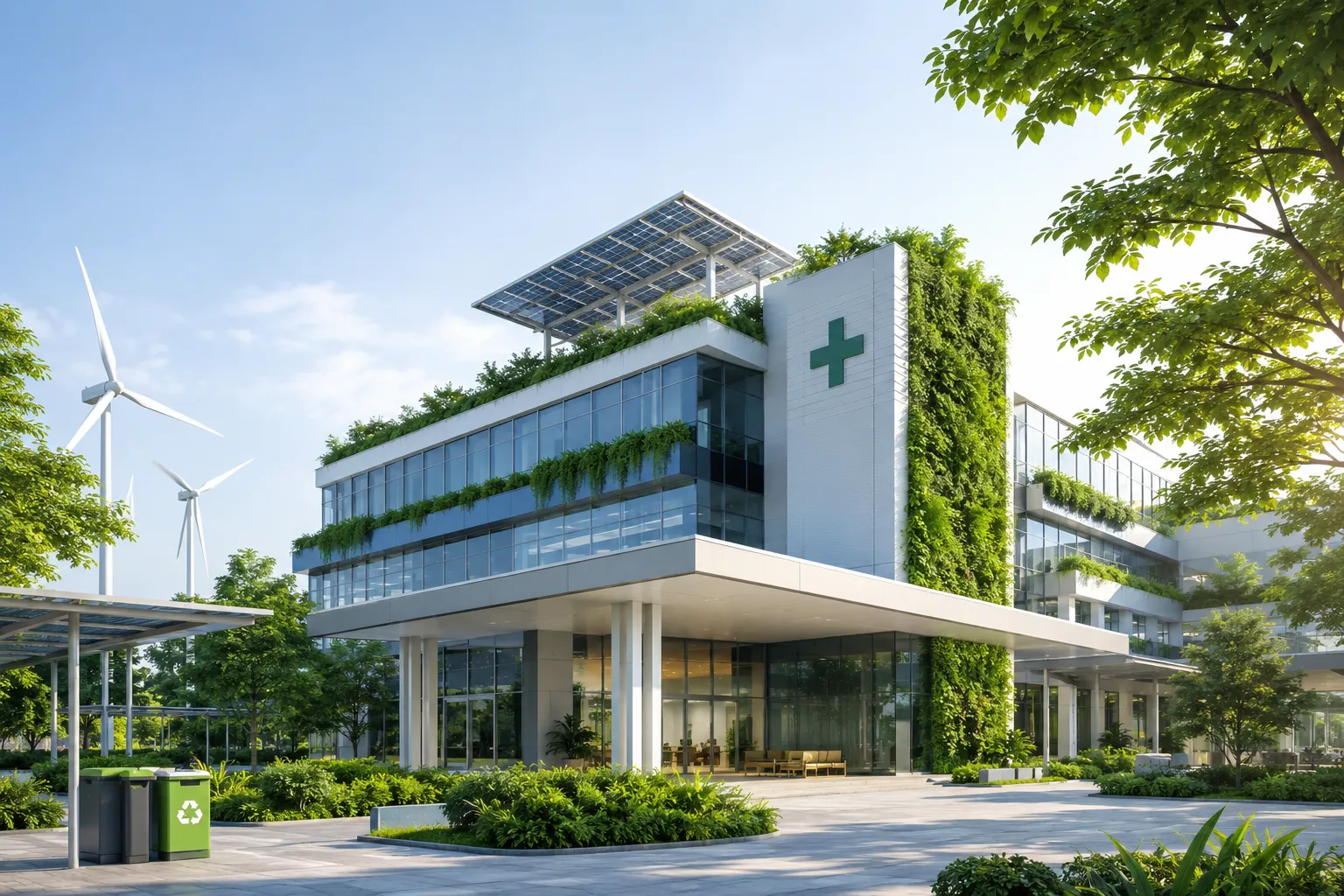
- Renewable energy adoption: Solar panels, wind energy, or other clean power sources reducing dependence on fossil fuels.
- Water conservation systems: Rainwater harvesting, greywater recycling, and low-flow fixtures to cut down water waste.
- Waste reduction and recycling: Proper segregation and treatment of medical, biodegradable, and recyclable waste.
- Sustainable procurement: Choosing eco-friendly, non-toxic building materials and medical supplies wherever possible.
- Biophilic design: Incorporating natural elements like vertical gardens, green facades, courtyards, and natural lighting to improve patient wellbeing.
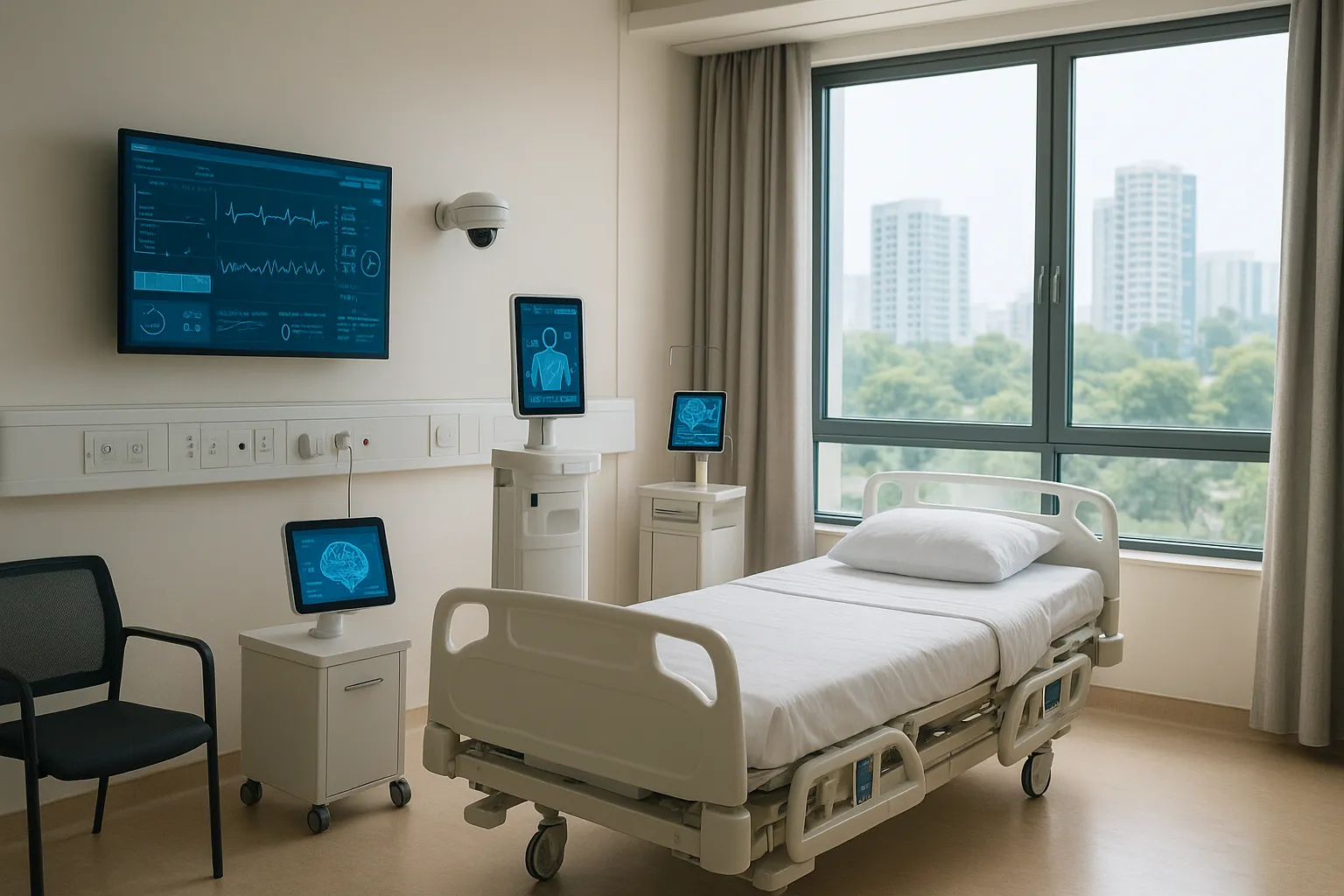
- Smart building management: Automated systems that monitor and adjust energy use, air quality, and lighting in real time.
Hospitals like the Khoo Teck Puat Hospital in Singapore, Ng Teng Fong General Hospital, and UMC Utrecht have integrated many of these natural solutions, from ground-level gardens to hanging green walls, and studies have shown a general increase in wellbeing among people who spend time in these environments.
Biophilic Design And Patient Wellbeing
Traditional hospitals tend to feel sterile, cold, and honestly a little anxiety-inducing. That minimal, colorless look isn't just an aesthetic choice, it actually affects how patients feel during recovery. Biophilic design pushes back against that by bringing natural materials and greenery into the building itself. It's not just about looking nice either. Research has linked this kind of design to real improvements in patient comfort, stress reduction, and even recovery speed.
Green Hospital Certification Systems Around The World
Just like green buildings in general, healthcare facilities can now be certified under specific rating systems that verify how sustainable they really are. This isn't just self-declared marketing. It's third-party verified, and it holds hospitals accountable to measurable standards.
| Certification System | Region | Primary Focus |
|---|---|---|
| LEED (Leadership in Energy and Environmental Design) | Global, developed by USGBC | Energy efficiency, water savings, material selection, indoor air quality |
| IGBC Green Healthcare Rating | India | Energy and water conservation, hygiene, local resource management |
| BREEAM Healthcare | United Kingdom / Global | Infection prevention, patient flow, carbon reduction |
| Green Star Healthcare | Australia | Staff wellbeing and building productivity |
| CASBEE Hospital | Japan | Resilience and emergency preparedness |
| GREENSHIP / GBI | Indonesia / Malaysia | Local energy management and waste reduction |
In India, IGBC is licensed by the US Green Building Council to issue LEED certifications, and it also runs its own Green Healthcare Facility rating system covering sub-centres, primary health centres, community health centres, and full hospitals. Kohinoor Hospital in Mumbai was among the first in India to pursue this path. On a global scale, LEED remains the most widely used system, with hospitals like the Arthur M. Blank Hospital in Atlanta, which opened in September 2024, becoming the largest project in the U.S. to achieve LEED v4 Building Design and Construction certification for healthcare.
Let’s Build Your Dream Hospital
Whether you’re planning a new hospital, expanding an existing facility, or upgrading your healthcare technology, Actiss Healthcare is here to guide you every step of the way. Let us help you turn your vision into reality. Contact us today for a free consultation & learn more about our services and how we can support your next healthcare project.

Why Certification Actually Matters
These certifications aren't just plaques on a wall. According to IGBC data, certified green hospitals can see energy savings of 30 to 40 percent and water savings between 20 and 30 percent right from the day they open. On the patient side, the intangible benefits are just as striking, including better daylight access, connection with nature, improved infection control, faster recovery by up to 15 percent, and a reduction in patient stay duration by as much as 41 percent.
That last point deserves attention. A shorter hospital stay isn't just good for the patient's comfort, it also reduces the financial and operational load on the hospital itself, which means green design pays for itself over time rather than just being a cost center.
From Green Hospital To Smart Hospital: The Natural Progression
Here's where things get interesting. A green hospital focuses on sustainability. A smart hospital focuses on technology and automation. When you combine the two, you get something far more capable than either concept alone. Smart building management systems, sensors that monitor air quality and energy use in real time, automated lighting that adjusts based on occupancy, and predictive maintenance tools all support the sustainability goals a green hospital is trying to achieve.
Think about it this way: a green hospital sets the intention (use fewer resources, produce less waste, protect the environment), while smart technology gives it the tools to actually execute that intention efficiently and consistently. Without smart systems, sustainability efforts often depend on manual monitoring, which is slow and prone to human error. With smart systems in place, a hospital can track its energy and water consumption continuously, catch inefficiencies immediately, and adjust operations without waiting for a monthly report.
Comparison: Traditional Hospital vs Green Smart Hospital
| Aspect | Traditional Hospital | Green Smart Hospital |
|---|---|---|
| Energy Source | Mostly fossil fuel dependent | Mix of renewable energy and efficient systems |
| Water Usage | High consumption, limited recycling | Rainwater harvesting and greywater reuse |
| Waste Management | Basic disposal practices | Segregation, recycling, and treatment protocols |
| Building Design | Sterile, minimal natural elements | Biophilic design with gardens and natural light |
| Monitoring | Manual checks and periodic reports | Real-time sensors and automated systems |
| Patient Recovery | Standard recovery timelines | Faster recovery linked to improved environment |
Challenges In Building Green Hospitals
None of this happens without obstacles. Building or converting a hospital into a green facility involves higher upfront costs, since sustainable materials, renewable energy systems, and certification processes all require investment before the savings kick in. There's also the challenge of retrofitting older buildings that weren't designed with sustainability in mind at all. Many existing hospitals were constructed decades ago, long before green building codes even existed.
This is also where getting the groundwork right through a proper hospital feasibility study makes a real difference, since it helps identify what sustainable systems a project can realistically afford and support long term. On top of that, staff training matters more than people expect. Even the most advanced green systems fail if hospital staff don't understand how to operate them correctly. Waste segregation only works if everyone follows the protocol. Water conservation systems only save resources if they're maintained properly. Public awareness plays a role too, since research from Indonesia and Taiwan found that public attitudes, behavior, and awareness directly influence how successful green hospital initiatives become in a community.
What This Means For The Future Of Healthcare
The direction healthcare is heading in seems pretty clear. Hospitals can't keep operating the way they used to, burning through resources without a second thought. The green hospital model, backed by real certification systems and growing global adoption, is proving that sustainability and quality patient care aren't opposing goals. They actually reinforce each other. Better air quality, natural light, and reduced pollution translate into better outcomes for patients, while efficient resource use translates into real savings for hospital administrators.
As more healthcare facilities adopt smart technology alongside green design principles, we're likely to see hospitals that are not only more sustainable but also more responsive, efficient, and comfortable for both patients and staff. This ties closely into broader patient-centered hospital design principles, since a healthier building environment is, at its core, a form of better patient care. This is the direction the smart hospital of tomorrow is heading, one where being environmentally responsible and being technologically advanced are treated as the same goal, not separate priorities.
Conclusion
A green hospital isn't just about solar panels on a rooftop or a recycling bin in the corner. It's a complete rethink of how healthcare facilities are designed, built, and operated, with the environment treated as seriously as patient care itself. From reducing energy and water use to improving air quality and speeding up patient recovery, the benefits reach far beyond a certification plaque. As green principles merge with smart technology, hospitals are moving toward a future where sustainability and advanced care work hand in hand. That's the real way ahead for a smart hospital, and it's a shift worth paying close attention to. If you're at the early stage of planning a facility like this, working with an experienced hospital project consultancy can help you build these sustainability goals into the project from the very first blueprint.
Let’s Build Your Dream Hospital
Whether you’re planning a new hospital, expanding an existing facility, or upgrading your healthcare technology, Actiss Healthcare is here to guide you every step of the way. Let us help you turn your vision into reality. Contact us today for a free consultation & learn more about our services and how we can support your next healthcare project.
Frequently Asked Questions
1. What is the main goal of a green hospital?
The main goal is to deliver quality healthcare while reducing the facility's environmental impact through energy efficiency, water conservation, waste reduction, and sustainable materials.
2. How much energy can a green hospital actually save?
According to IGBC data, certified green hospitals can achieve energy savings of around 30 to 40 percent and water savings between 20 and 30 percent compared to conventional hospitals.
3. What certifications are available for green hospitals?
Common certifications include LEED for Healthcare, IGBC Green Healthcare Rating in India, BREEAM Healthcare in the UK, Green Star Healthcare in Australia, and CASBEE Hospital in Japan.
4. Are green hospitals more expensive to build?
Upfront construction costs can be higher due to sustainable materials and technology, but the long-term savings on energy, water, and operational costs generally offset that initial investment over time.
5. How does a green hospital differ from a smart hospital?
A green hospital focuses on environmental sustainability, while a smart hospital focuses on technology and automation. When combined, smart systems help hospitals achieve their sustainability goals more efficiently.
6. Can existing hospitals become green, or is this only for new buildings?
Existing hospitals can absolutely be retrofitted with green practices, including better waste segregation, water recycling systems, energy-efficient lighting, and sustainable procurement, even if a full green building certification takes longer to achieve.